
The Leadership Vocabulary That Builds Trust and Drives Sales Performance

Introduction: The Words That Shape Sales Culture
Have you ever walked away from a morning team meeting feeling drained instead of fired up?

That’s not an accident. The words your sales leader chooses, or the ones you use as a leader, have a real impact on how your team performs.
Language is not just a way to pass information. It directly influences motivation, trust, and how your team shows up every day. Research shows that authentic leadership has a measurable effect on employees’ contextual performance, which basically means how well people go above and beyond their basic job duties. When leaders use words that build trust and show real care, their teams respond with better effort and commitment.
Here is the problem. Many sales leaders accidentally use words that create fear or pressure. They think they are pushing for results, but they are actually killing motivation. This is especially important in 2026, when human-centered leadership has become essential. As AI handles more technical tasks, your people skills matter more than ever.
The good news? You can fix this. Mastering strategic leadership vocabulary is a skill anyone can learn. The right leadership words can transform how you inspire your team to hit targets without burning them out.
In this article, we will look at which words work, which ones hurt, and how you can build a vocabulary that drives real results. If you want to build a sales culture that thrives, start with what you say every day.
Why Leadership Vocabulary Matters More Than Ever in 2026
If you think the words you use as a leader don’t matter that much, think again. The way you talk to your sales team directly shapes their energy, their trust in you, and their willingness to go the extra mile. In 2026, this is more important than ever. Here’s why.
The Shift to Human-Centered Leadership
We are in a new era of work. As artificial intelligence takes over more technical and repetitive tasks, your people skills become your biggest competitive advantage. According to a report on leadership trends for 2026, human-centered leadership has become essential because the human contribution is now more valuable than ever [situational.com/blog/leadership-trends-to-dominate-2026].
This means the words you choose aren’t just nice to have. They are a core part of your leadership toolkit.
When your team feels that you see them, hear them, and respect them, they perform better. A 2026 study on authentic leadership found that leaders who use words that show genuine care and integrity have a measurable positive effect on their team’s contextual performance, which is how much people go beyond their basic job duties [frontiersin.org/journals/psychology/articles/10.3389/fpsyg.2026.1669534/full]. That extra effort comes from feeling safe and valued.
Words Create Psychological Safety
Psychological safety is the belief that you won’t be punished or humiliated for speaking up, asking questions, or making mistakes. Your words can either build that safety or tear it down. Research from 2025 on motivating language shows that transformational leaders who use encouraging and purposeful language significantly boost employee engagement [pmc.ncbi.nlm.nih.gov/articles/PMC12220102]. On the flip side, when leaders use inconsistent or confusing language, it backfires. A 2024 study revealed that "differentiated empowering leadership," where leaders treat team members unevenly with their words and actions, actually hurts team performance because it reduces information sharing [journals.sagepub.com/doi/10.1177/00187267241303265].
Think about it. If you tell one rep "you’ve got this" and then micromanage another with "don’t mess this up," you create confusion and distrust. Your leadership vocabulary must be consistent and inclusive.
What’s Different in 2026?
Several big trends are making leadership vocabulary more critical this year:
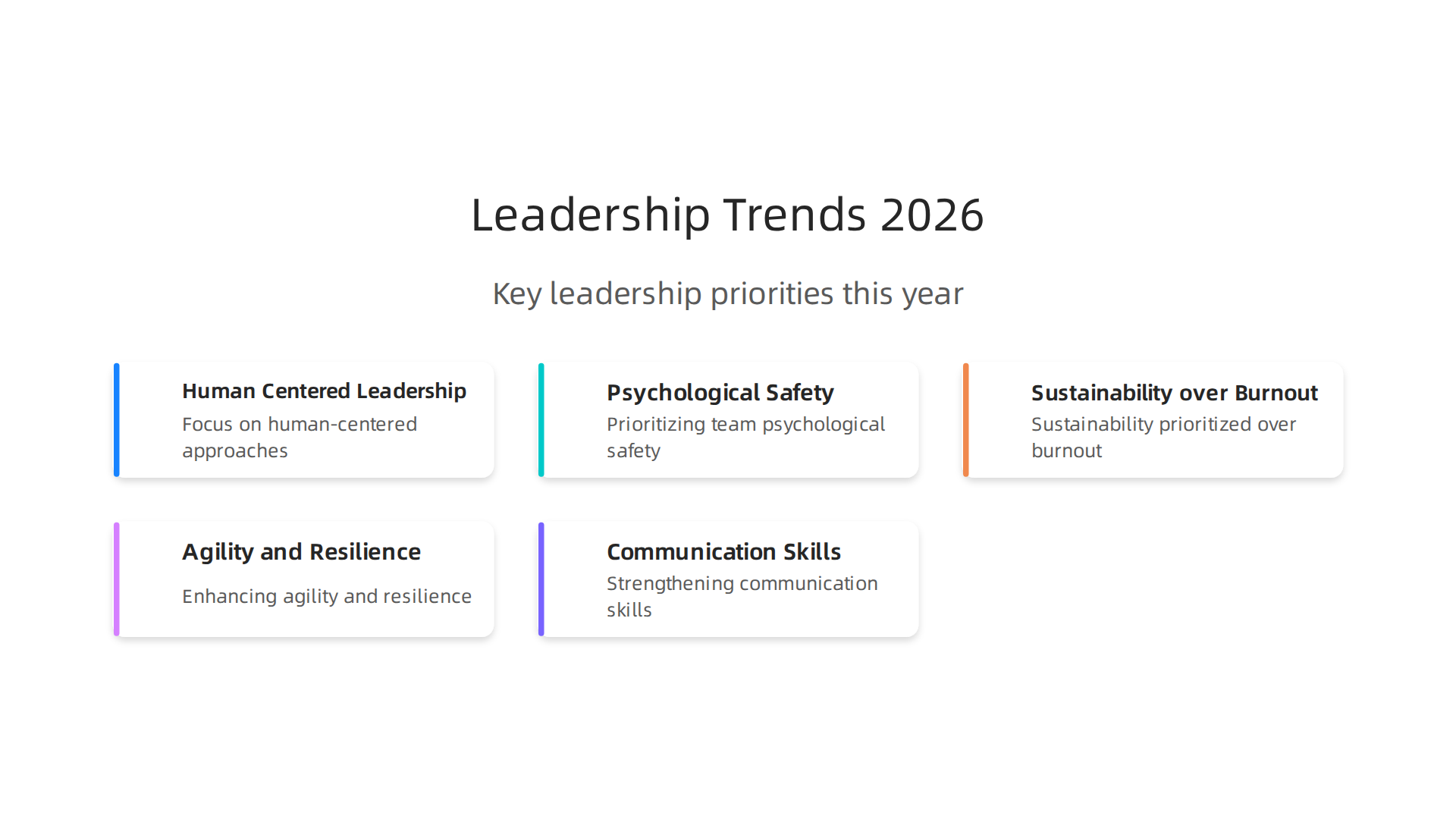
- Sustainability over burnout. HR leaders are now paying close attention to team boundaries and well-being. Sustainable performance is the goal, not just short-term wins [tagleaders.org/developing-leaders-in-2025-what-hr-learned-and-what-to-prepare-for-in-2026/].
Words that push too hard or create fear will backfire.
- Agility and resilience. The top workforce trends for 2026 include agility, resilience, and awareness [ttisi.com/blog/top-workforce-trends-for-leaders-in-2026/]. Leaders need words that help teams adapt quickly without feeling panicked.
- Communication skills are a must. The old command-and-control style is dead. Now, effective communication skills training is a core part of leadership development. Your ability to pick the right leadership words determines whether your team feels empowered or defensive.
The Bottom Line
Your leadership vocabulary directly influences your team’s engagement, trust, and performance. In 2026, with the spotlight on human connection, every word counts. If you want to build a sales culture that thrives, start by examining how you talk to your team. Want to dive deeper into how your communication style affects sales results? Check out our guide on the transformational leadership model for practical tips you can apply today.
Core Leadership Words Every Sales Manager Should Master
So you know why your words matter. Now let’s get practical. Which specific leadership words should you use every day? And which ones should you drop immediately?
Let’s break it down.
Words That Build Trust and Collaboration
The best sales managers use simple, powerful language that makes their team feel included and capable. Here are three words to start using today.
"Possibility"
When you say "possibility," you open a door. Instead of "this deal is tough," try "this deal has a lot of possibility." That small shift changes the energy in the room. It tells your team you see opportunity, not just obstacles. It invites creative thinking.
"We"
This is the ultimate teamwork word. "We are going to figure this out." "We need to work on this proposal together." "We" replaces "you" and "I" with a shared identity. It builds trust and reminds everyone you are in this together. A consistent "we" vocabulary reinforces your team’s sense of purpose.
"Grow"
Salespeople want to get better. Use "grow" in your feedback. Instead of "you need to fix your closing rate," say "let’s find ways to grow your closing rate." That small change makes feedback feel like coaching, not criticism. It points toward improvement, not failure.
Words That Quietly Hurt Your Team
Now let’s look at words that do the opposite. These words can shut down creativity and make your team defensive. Many sales managers use them without realizing the damage they cause.
"But"
This word erases everything said before it. "Great job on that call, but your follow up needs work." Your rep only hears the "but." Replace "but" with "and." "Great job on that call, and let’s look at how to improve the follow up." That feels like a partnership, not a correction.
"Must"
"Must" sounds like a command. It triggers resistance. Instead of "you must hit this target," try "our goal is to hit this target." The second version makes people feel like they have a choice and a shared mission.
"Problem"
Labeling something a "problem" makes it feel heavy and stressful. Use "challenge" or "opportunity" instead. "We have a challenge with this account" feels more manageable than "we have a problem." Your team will stay calmer and think more clearly.
Art Sobczak, a sales expert, recently shared 26 sales words and phrases he is banning in 2026.

His list includes words like "just," "actually," and "no problem" because they quietly lower your status and weaken your message. You can check out his full list to see which words you might be overusing.
And here is another big one: avoid weasel words in sales conversations. Words like "maybe," "try," and "hopefully" sound weak. They make you sound unsure. Instead, use direct, confident language. If you want to learn more about this, read up on the weasel words you should eliminate from your sales vocabulary.
Consistency Creates Team Identity
Here’s the big takeaway. Using the same powerful leadership words over and over builds a team culture. When everyone hears "we," "possibility," and "grow" consistently, those words become part of your team’s identity. Your reps start using them with each other and with clients.
Think about your morning huddle. Do your words make your team feel energized or drained? Small changes in your leadership vocabulary can transform the whole mood of your team. Start with just one word this week. Replace "but" with "and" or swap "problem" for "challenge." Watch how your team responds.
Want to take your leadership skills further? Check out our complete guide on achieving peak sales performance with the transformational leadership model. It covers how your words connect to your overall leadership style.
Using Vision-Driven Vocabulary to Align Your Team
You know the individual words that build trust and avoid harm. Now it is time to zoom out. Vision-driven vocabulary goes beyond single words. It uses phrases that connect your team’s daily work to a bigger purpose. This is one of the most powerful leadership skills you can develop.
When you say "imagine the impact of closing this deal," you are not just talking about a sale. You are painting a picture of what that win means for the customer, the team, and the company. That kind of leadership words makes your reps feel part of something bigger than their daily tasks.
Another powerful phrase is "our shared goal." Instead of "your quota," try "our shared goal for this quarter is to reach 110%." The word "our" creates collective ownership. Your team stops feeling like individuals working alone. They start feeling like a unit working together.
Why does this matter? Because alignment drives results. Organizations with highly aligned sales and marketing teams see a 39-percentage-point difference in year-over-year revenue compared to poorly aligned companies, according to Aberdeen Group data shared by The Growth Syndicate. When your team is aligned around a common vision, everyone moves in the same direction.

Vision-driven vocabulary also reduces the need for micromanagement. When your reps clearly understand the bigger picture, they take more initiative. They do not wait for you to tell them every step. They start solving problems on their own because they know what the end goal looks like. That is the kind of leadership styles that empowers teams.
So how do you build this vocabulary? Start by linking every task to the vision. In your morning huddle, do not just announce numbers. Say, "If we hit this target, we can expand into a new market that our team has been dreaming about." Use phrases like "picture the result" or "think about the customer’s success." These are simple communication skills training tactics you can use today.
You do not need a formal vision statement to do this. But if you want a structured approach, a clear vision statement helps align everyone from the top down. The monday.com vision statement guide offers examples and templates to define your organization’s future in 2026.

Finally, remember that consistency matters. Use your vision-driven vocabulary every day. Over time, these phrases become part of your team’s language. Your reps start repeating them with each other and with clients. That is when your leadership truly multiplies.
Want to go deeper? Our article on leadership mentoring for salespeople shows how to build these skills with structured guidance.
Empathy and Trust: The Vocabulary of Psychological Safety
Vision-driven vocabulary points your team toward a shared future. But even the clearest vision falls flat if your people are afraid to speak up. That is where empathy and trust come in. The words you choose can either build a safe space or shut it down. And without that safety, innovation and honest feedback dry up fast.
Psychological safety is the belief that you will not be punished or humiliated for speaking your mind. It is the bedrock of high-performing teams. According to research by the Innovative Leadership Institute, leadership in 2026 requires recognizing emerging shifts that prioritize people-first cultures. When your sales team feels psychologically safe, they share fresh ideas, admit mistakes, and ask for help without fear. That is exactly the kind of environment where leadership skills thrive.
So what does psychological safety sound like in everyday conversation? It starts with simple, human phrases.
Phrases That Build Safety
Think about the last time a rep missed a target. You could say, "What went wrong?" That sounds like a blame game. Instead, try, "We learn from this. What can we do differently next time?" That small shift changes everything. The rep stops defending themselves and starts problem-solving.
Other powerful phrases include:
- "I appreciate your honesty."
- "Your perspective matters."
- "That is a valid concern."
- "Thank you for sharing that."
- "We are in this together."
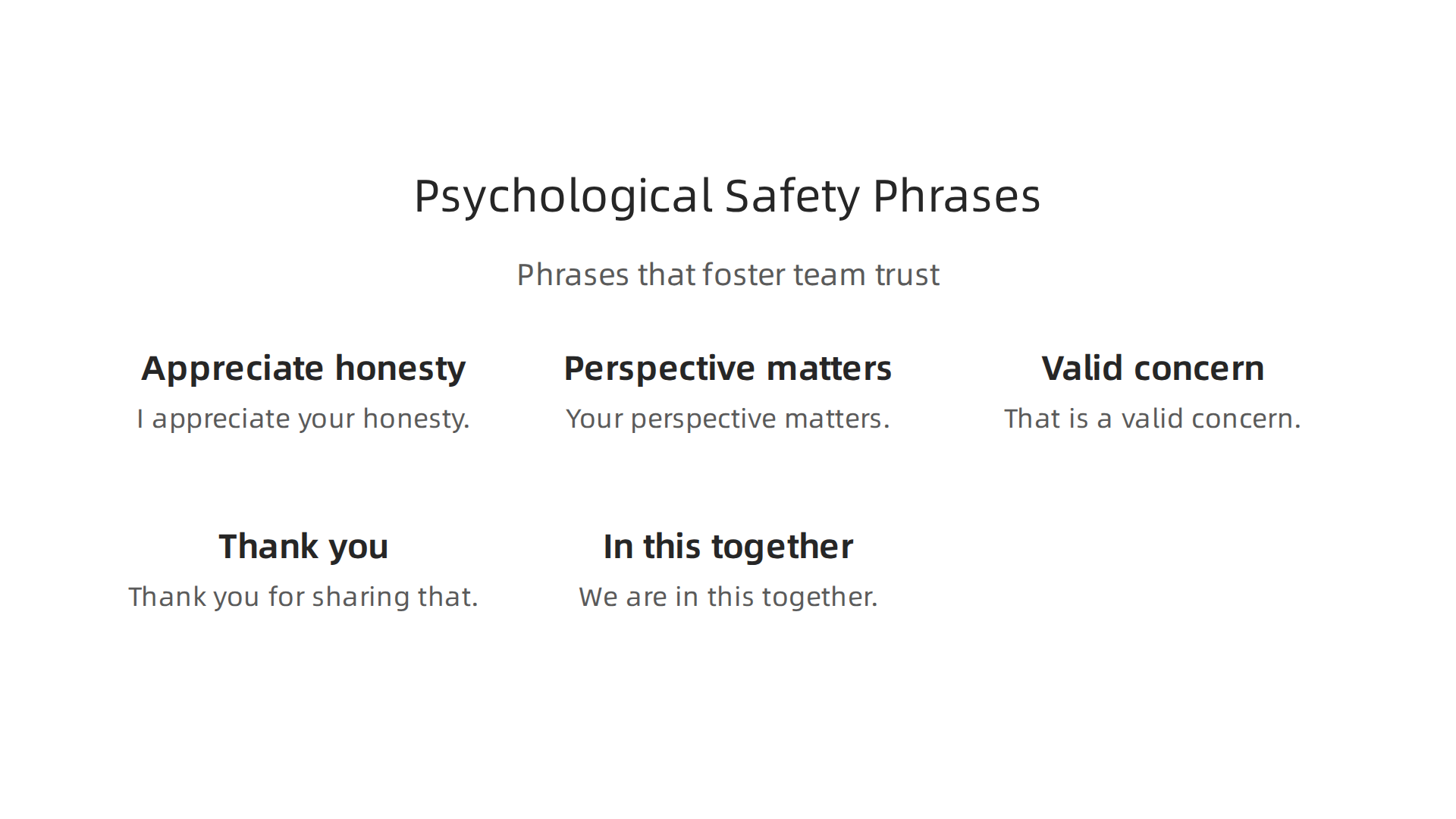
Each of these is a leadership words tool that signals respect and inclusion. Research from Sage Journals in 2026 found that discussion leadership and empathy are closely linked to psychological safety. Leaders who use this kind of language create teams where people feel valued, not judged.
Empathy Drives Engagement
Empathy is not just a soft skill. It drives hard results.

The Inspiring Workplaces team reported in 2026 that teams led with empathy are 8.5 times more engaged than average. That kind of engagement translates directly to sales performance. When your reps trust that you care about their success and well-being, they go the extra mile for you and for customers.
Using empathetic vocabulary reduces the fear of failure. Your reps stop worrying about looking stupid. They start experimenting with new approaches and sharing what works. That is how you turn a good team into a great one.
Making It Part of Your Routine
You do not need a formal script. Just practice swapping judgment language with curiosity language. Instead of "Why did you do that?" say "Help me understand your thinking behind that." Instead of "That mistake cost us a deal," say "What can we take away from this experience?"
These small changes are part of effective communication skills training. They also reflect a leadership styles that is collaborative rather than authoritarian. If you want to go deeper into building this mindset, check out our guide on the transformational leadership model for sales performance. It shows how safety and vision work together to drive results.
Finally, remember that building psychological safety is an ongoing practice, not a one-time fix. The 2026 Psychological Safety Study by COE Workplace Options shows that organizations with high psychological safety outperform in innovation and retention. Use your words daily to reinforce a culture of trust. Over time, your team will feel safe enough to bring their best ideas to the table and that is when your leadership truly multiplies.
Action-Oriented Language for Accountability and Growth
A psychologically safe team is a great start. But safety alone does not guarantee results. You also need accountability. The trick is using accountability language that drives growth, not fear. In 2026, creating a culture of accountability looks different from the old command-and-control style. According to Empathable, modern accountability focuses on ownership and learning, not punishment.
The words you choose make or break this shift. Action-oriented language turns mistakes into opportunities. It turns blame into problem-solving.

And it gives your reps ownership over their next steps.
Swap Blame for Learning
Here is a simple rule: never ask "Why did you fail?" Replace it with "What can we learn from this?" The first question triggers defensiveness. The second triggers reflection. That small change is one of the most powerful leadership words you can use.
Research from Prospeo shows that sales accountability fails without the right systems and language. So build a vocabulary of growth. When a deal falls through, say "Let us look at what happened and find one thing we can improve." Your rep leaves the conversation feeling capable, not crushed.
Give Ownership with Next Steps
Accountability feels heavy when it is forced on people. But when you invite ownership, it becomes empowering. Use phrases like "Let us set a next step together" or "What do you think is the best move here?" These words shift responsibility from your shoulders to theirs in a supportive way.
This is a core part of effective communication skills training. You are teaching your reps to think independently while knowing you have their back. The combination builds trust and performance at the same time. For a deeper look at this approach, read our guide on the transformational leadership model for sales performance. It connects vision, safety, and accountability into one system.
Feedback That Builds Up
Feedback is where most leaders slip. They focus on what went wrong and forget to offer a positive path forward. Try this structure: "I noticed you did not ask for the next appointment in that call. And I would love to see you practice that closing question next time." That simple framing separates the person from the behavior. It gives clear direction without shame.
This kind of leadership styles is collaborative and coaching-based. It works better than criticism because it respects the person while pushing for improvement. The 2026 guide from The OPT on performance standards highlights that fair, transparent feedback drives better team outcomes. Use action-oriented language to make every feedback session a growth session. Over time, your team will crave these conversations because they know every critique comes with a roadmap to get better.
Avoiding Toxic Language: Words That Undermine Your Leadership
You now know how to use action-oriented language to drive growth. But there is a catch. Even one wrong phrase can wipe out all the trust you just built. In 2026, the best leaders are learning which words to cut out completely. Some phrases sound harmless. But they create defensiveness, lower respect, and damage psychological safety.
Let’s start with absolutes. Words like "always," "never," and "you should have." When you say "You never close on time," your rep stops learning and starts defending. Sales expert Art Sobczak shares a list of 26 sales phrases he is banning in 2026. These kinds of blame-heavy words top the list. Instead of "You always miss the follow-up," try "Let us look at what blocked the follow-up this time." This keeps the conversation open.
Next up is sarcasm and dismissiveness. Phrases like "That is obvious" or "I already know that" are quiet team killers. Imagine a rep shares an idea. A sarcastic leader says "Obviously, everyone knows that." The rep feels small. A curious leader says "Thanks for bringing that up. How did you come across that insight?" The rep feels valued. Which team do you think shares more ideas? A core leadership skill is knowing how to receive ideas. Curiosity keeps the ideas flowing.
So how do you fix toxic language? You swap it for curiosity. Replace "Why did you fail?" with "What can we learn?" Replace "That is wrong" with "What led you to that conclusion?"
This simple shift is a core part of modern communication skills training. And it is a hallmark of the best leadership styles in 2026. To build a full system around this coaching approach, read our guide on the transformational leadership model for sales performance. It connects safety, accountability, and growth into one framework.
Here is your challenge. Audit your own leadership words this week. Every time you catch a "never" or a dismissive comment, replace it with a question. You will be amazed at how fast your team starts to open up, take risks, and perform better.
Summary
This article explains how the specific words sales leaders choose shape team motivation, trust, and performance, especially in 2026 when human-centered leadership matters more than ever. It shows why language creates psychological safety, how consistent vocabulary builds team identity, and which words and phrases encourage ownership, learning, and collaboration. The guide lists positive words to adopt (like
Category
Sales Leadership
Written by

Published
April 29, 2026
More from the blog
Related reading



Next steps
Put the ideas from this article into practice
Explore related posts on the blog or reach out if you need a specific resource.
Sales Closing Course is a specialized affiliate content website focused on helping people learn and improve sales closing skills. The site publishes high-quality content about sales closing techniques, high-ticket sales training, objection handling, communication skills, closing frameworks, income p