
Achieve Peak Sales Performance with the Transformational Leadership Model

Are you an individual seller trying to hit big goals, or perhaps leading a small sales team that just isn’t quite reaching its full potential?

In today’s fast-moving world of sales, many face the same tough challenges. We often see inconsistent sales numbers, team members lacking confidence, and old sales methods that just don’t work like they used to. It can feel like you’re constantly looking for fresh ways to inspire your team or even yourself to achieve more.
This is where understanding different ways of leading can really make a difference. Traditional ways of leadership, known as leadership theories, might focus on rules and rewards. But there’s a powerful approach called the transformational leadership model that helps people grow and reach higher goals than they thought possible. In 2026, this model is more important than ever for small sales groups and even for individual sellers managing their own drive and performance. It’s a leadership style that focuses on inspiring and motivating people to work towards a shared goal through personal growth and a sense of purpose, not just strict rules or simple rewards (National University, 2026).
Research shows that the transformational leadership style can greatly improve how well an organization or team performs (Regent University, 2026). It’s all about encouraging your team to reach new levels of success by boosting their morale and helping them see the value in their work (Simply Psychology, 2026; PMC, 2026).
In this article, we’ll dive deep into what the transformational leadership model really is. We’ll explore why this specific type of leadership is so helpful for getting better sales results and how you can use it effectively. The best part? You don’t need a huge budget or a big company to make it work. We’ll show you how to apply this powerful leadership approach in an affordable way, whether you’re working alone or guiding a small team of sales professionals. It’s about building a better future, one sale at a time. To learn more about setting your sales team up for guaranteed success, you might want to explore how to apply the proven system for predictable growth in sales management.
What is the Transformational Leadership Model?
Let’s break down the transformational leadership model in simple terms. Think of it like a sports coach who doesn’t just tell players what to do, but inspires them to become better athletes and work together for a big win.

This leadership style is all about inspiring and motivating people to achieve goals that are bigger than they first thought possible (National University, 2026). It’s a powerful way to lead that focuses on helping people grow and find purpose in their work, rather than just using rules or rewards to get things done (Simply Psychology, 2026).
This specific type of leadership is different from older ways, which might just focus on tasks and strict rules. The transformational leadership model encourages team members to aim higher, improving how well a team or company performs overall (Regent University, 2026). For individual sales professionals, it means finding a deeper reason to connect with customers and push past challenges. For small sales team leaders, it means building a team that’s excited and committed, not just checking boxes.
The transformational leadership style really helps in sales because it builds strong belief and drive. It helps a sales team feel good about their work and see the real value in what they do (PMC, 2026). This can lead to much better sales results.
Here are the main parts of the transformational leadership model, often called the "Four I’s":
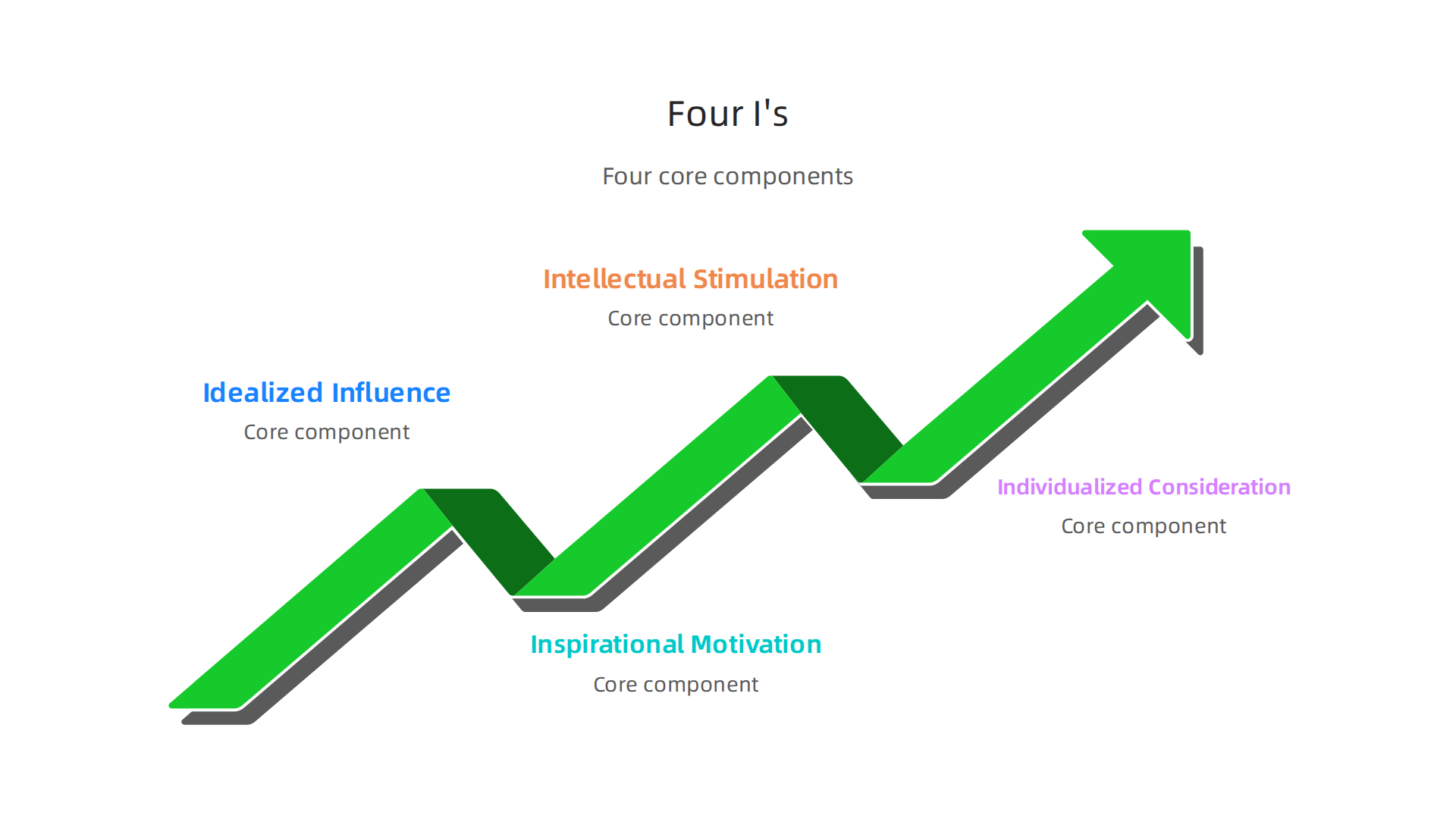
- Idealized Influence: This means being a good example. A leader with idealized influence shows strong values and does the right thing, earning trust and respect from their team. They act in ways they want their team members to act.
- Inspirational Motivation: This is about sharing an exciting vision for the future. A leader inspires their team with clear and exciting goals, making everyone want to work towards that shared future. They help the team see a bigger picture beyond just daily tasks (PMC, 2026).
- Intellectual Stimulation: This part means encouraging new ideas and creative thinking. Transformational leaders ask their team members to come up with new ways to solve problems and improve things, instead of just following old methods.
- Individualized Consideration: This is about caring for each person. Leaders pay attention to the needs and feelings of each team member, offering support and helping them learn and grow. They act like mentors, helping each person reach their full potential.
Whether you’re selling on your own or guiding a small group, understanding these parts of transformational leadership can help you boost your own drive and inspire others. It’s about helping everyone find meaning and growth in their work. To learn more about how building purpose can lead to career growth, check out our guide on how to build purpose and growth in sales careers.
Why the Transformational Leadership Model Improves Sales Outcomes
So, why does this special transformational leadership model actually make sales better? It’s simple, really. When leaders use this style, they don’t just ask people to sell more. They help sellers become better, more driven people. This leads to much better results that stick around.
Think about it this way: when a sales team feels truly supported and inspired, they become more engaged in their work. They feel a stronger connection to their goals and the company’s vision. Studies show that this kind of transformational leadership has a strong positive effect on how well people perform at work, including in sales roles [1, 2].
Here’s how the transformational leadership model helps with common sales struggles:
- Dealing with tough "No’s" (Objection Overload): Sales can be hard when customers always say no. But a transformational leader encourages their team to think creatively and find new ways to solve problems (that’s the "Intellectual Stimulation" we talked about). This helps sellers learn how to handle objections better and not give up so easily. They don’t just follow a script, they find smart solutions.
- Feeling unsure (Confidence Gaps): Sometimes, sellers lose their confidence. Maybe they had a bad week or feel they aren’t good enough. A transformational leadership style builds confidence because leaders act as role models and mentors (Idealized Influence and Individualized Consideration). They help each person grow and believe in their own power to succeed. This makes sellers more sure of themselves when talking to customers.
- Not hitting sales targets (Inconsistent Quotas): When a team is inspired by a clear and exciting vision, and everyone feels supported to do their best (Inspirational Motivation), they work harder and more consistently. They’re not just working for a paycheck. They’re working for a bigger purpose. This strong drive helps them hit their sales numbers more often and even go beyond them.

Metrics for leadership effectiveness often include business results like revenue growth, showing how good leadership directly helps the bottom line [3].
In short, the transformational leadership model helps build a sales team that is:
- More Engaged: They care deeply about their work and their customers.
- Highly Motivated: They have a strong inner drive to reach big goals.
- Always Learning: They look for new ways to get better and solve problems.
- Consistent Performers: They hit their targets more regularly because they are committed and skilled.
When a sales leader applies these principles, they create a culture where people want to excel. This makes closing deals easier, boosts team morale, and leads to more predictable and higher sales growth for the whole business. If you are looking to manage your sales team for such predictable growth, exploring proven systems can be very helpful.
Core Components Explained — What sellers and managers should focus on first
We’ve talked about how the transformational leadership model helps sales teams thrive. Now, let’s look at the special parts of this leadership style. These parts are like the building blocks that make it all work. Understanding them helps both sellers and managers know what to do first to get better results. Experts often point to four main parts of transformational leadership [1].
Here are the four core components of the transformational leadership model, explained simply:
1. Idealized Influence (Being a Role Model)
This is about the leader being a great example for the team. A leader with "Idealized Influence" acts in ways that make people respect and trust them. They show strong values, do what’s right, and are consistent. Sellers see their leader as someone they want to be like.
- For Sellers: You feel proud to be part of the team and trust your leader’s judgment. You see them as fair and honest.
- For Managers: You lead by example. Your team looks up to you because of your actions, not just your words.
- Self-Check Prompt: As a leader, do my team members truly trust me? Do I act in ways that show strong values and ethics every day?
2. Inspirational Motivation (Sharing an Exciting Vision)
This component is all about inspiring the team with a clear and exciting picture of what they can achieve together. Leaders share a compelling vision and help everyone understand how their work fits into a bigger purpose. This creates enthusiasm and a desire to succeed.
- For Sellers: You feel energized and understand the "why" behind your sales goals. You’re motivated to work towards something bigger than just hitting a number [2].
- For Managers: You paint a clear, positive picture of the future and help your team feel passionate about reaching it. You make the goals feel meaningful.
- Self-Check Prompt: Do my sellers know our big goals and why they matter? Are they excited about the vision we’re working towards as a team in 2026?
3. Intellectual Stimulation (Encouraging New Ideas)
This part of transformational leadership means encouraging team members to think for themselves, be creative, and question old ways of doing things. Leaders push their teams to solve problems in new ways and to learn from mistakes. It’s about growing smart.
- For Sellers: You feel free to try new sales approaches, offer fresh ideas, and solve customer problems creatively without fear of judgment. You’re always learning how to handle tricky situations [3].
- For Managers: You challenge your team to think outside the box. You ask good questions and let them find their own solutions, even if it means trying something different.
- Self-Check Prompt: Do my sellers feel comfortable suggesting new ways to sell or new ways to solve customer problems? Do I encourage them to think creatively instead of just following a script?
4. Individualized Consideration (Personal Coaching and Support)
This means the leader pays close attention to each team member’s unique needs, strengths, and weaknesses. They act like a mentor or coach, offering personal support, guidance, and opportunities for growth. This helps each seller get better in their own way.
- For Sellers: You feel supported and understood. Your leader knows what you need to grow and helps you get there. You get feedback that helps you improve specific skills.
- For Managers: You get to know each person on your team individually. You provide one-on-one coaching and help them develop their talents, making them stronger sellers [4].
- Self-Check Prompt: Do I truly understand what each individual on my sales team needs to improve? Do I offer personal help and growth opportunities tailored to them?
By focusing on these four components, a leader can truly transform their sales team. It’s about more than just managing tasks; it’s about leading people to become their best selves. This kind of leadership helps build a stronger, more effective sales force. If you’re looking to apply these principles to better manage your sales team for predictable growth, you might find more insights into proven systems for success.
Day-to-day Applications: How sales leaders and solo sellers use transformational behaviors
Knowing the four parts of the transformational leadership model is great, but how do you actually use them every day? Let’s look at simple, low-cost ways both sales leaders and individual sellers can use these ideas in 2026.

These small actions can make a big difference without needing a huge budget for special training programs. In today’s fast-changing sales world, having clear leadership and vision is more important than ever for teams to do well [1, 2].
For Sales Managers: Leading Your Team Daily
Here’s how sales managers can put transformational leadership into action every day:
- Be a Role Model (Idealized Influence):
- Show honesty: Always be open and truthful with your team, even when things are tough. Your team trusts you when you are consistent.
- Set the standard: Follow the rules and best practices you expect from your team. For example, if you want them to be on time for meetings, you should be too.
- Act with purpose: Show them you care about the company’s big goals, not just hitting your own numbers [3].
- Share an Exciting Vision (Inspirational Motivation):
- Start meetings with "why": Before diving into tasks, remind everyone of the team’s big purpose or the customer impact. Make goals feel meaningful [4].
- Celebrate small wins: Point out how daily efforts connect to the larger vision. "Great job on that call, Sarah! That’s another step toward reaching our big quarterly goal!"
- Use storytelling: Share success stories of how a seller’s hard work helped a customer.
- Encourage New Ideas (Intellectual Stimulation):
- Ask "what if" questions: During team meetings or 1:1s, ask, "What if we tried it this way?" or "How else could we solve this problem?"
- Create a safe space: Let sellers know it’s okay to try new sales tactics or share creative ideas without fear of being wrong.
- Learn from mistakes: When something doesn’t work out, discuss it as a learning chance, not just a failure.
- Offer Personal Coaching (Individualized Consideration):
- Quick 1:1 check-ins: Spend 5-10 minutes with each team member regularly. Ask how they are doing and what they need, not just about their numbers.

*   **Personalized feedback:** Give specific advice that helps *that* person grow. "John, I noticed you did great on handling that first objection. Next time, let's work on asking more open-ended questions earlier in the call." This kind of coaching is key for managers today [5].
*   **Help with career paths:** Talk about what skills they want to learn and suggest ways to get there.
For Solo Sellers: Leading Yourself to Success
Even if you don’t manage a team, you can use transformational behaviors to lead yourself and improve your selling skills:
- Be Your Own Role Model (Idealized Influence):
- Set high standards: Be honest in your interactions and always do what you say you will for clients. Build trust in every step.
- Stay ethical: Make choices you’re proud of, even when no one is watching.
- Keep an Exciting Vision (Inspirational Motivation):
- Know your "why": Remind yourself why you’re working so hard. Is it for financial freedom, to help customers, or to master sales? This vision helps push you forward [6].
- Visualize success: Picture yourself hitting your goals and the positive impact that will have.
- Look for New Ideas (Intellectual Stimulation):
- Try new things: Don’t be afraid to experiment with different sales scripts or ways to follow up with leads. The sales world is always changing, so trying new things is a good move for 2026 [7].
- Reflect on challenges: When a sale doesn’t close, ask yourself: "What did I learn? What could I do differently next time?"
- Seek out new learning: Read sales blogs, watch webinars, or listen to podcasts to gather fresh ideas.
- Give Yourself Personal Coaching (Individualized Consideration):
- Self-reflection: At the end of the day, think about your calls and meetings. What went well? What could be better?
- Ask for specific feedback: If you have a mentor or a colleague, ask for their thoughts on your performance in certain areas.
- Invest in yourself: Find resources that help you grow specific sales skills.
By doing these small, focused actions every day, both sales managers and solo sellers can truly embody the transformational leadership model. This human-centered approach builds stronger skills and helps everyone succeed in their sales careers.
Ready to take your sales skills to the next level? Explore proven systems for predictable growth and find resources to help you close more deals and advance your career.
Training & Development: Affordable ways to build transformational skills
You’ve learned how sales leaders and solo sellers can use the transformational leadership model every day. Now, let’s talk about how you can get better at these skills without spending a lot of money or time. It’s all about finding smart ways to learn and grow in 2026.
Easy Ways to Learn Transformational Skills
You don’t need a huge budget for fancy training. Here are some simple and cheap ways to build your transformational leadership style:
- Self-Study Modules and Online Courses: Many places offer short online courses or modules you can do at your own speed.

Some programs focus on transformational leadership, breaking it down into easy-to-understand parts [1]. You can often find free lessons or trials. Look for ones that teach the core principles of leadership and how to inspire people. Some programs take as little as 15 hours to complete [2].
2. Short Workshops and Webinars: Keep an eye out for free or low-cost webinars. Many companies and experts offer short online sessions where you can learn new skills.
These are great for getting new ideas and staying fresh on leadership trends [3]. They often cover topics like communication skills or how to build strong teams [4].
3. Peer Coaching and Mentorship: This is a powerful, free way to learn. Find someone you look up to in sales or a colleague who wants to grow too. You can help each other by sharing experiences, giving advice, and practicing new ways to lead. This kind of hands-on learning is super valuable.
Simple Tools for Practice
To really make the transformational leadership model stick, you need to practice. Here are some easy tools you can use:
- Role-Play Frameworks: Practice tough conversations. For example, if you’re a manager, role-play how you’d give inspiring feedback or encourage new ideas. If you’re a solo seller, practice how you’d explain your "why" to yourself or handle a tricky client call. This helps you get better at idealized influence and inspirational motivation.
- Micro-Lessons: Break down big skills into tiny bits. For example, instead of "learn all about communication," try "practice asking open-ended questions for 5 minutes today." This makes learning feel less overwhelming.
- Feedback Templates: Create simple forms for giving and getting feedback. For managers, this helps with individualized consideration. For solo sellers, use it to reflect on your own performance or ask a mentor for specific tips. This helps you learn from mistakes and improve your leadership.
- Vision Statement Prompts: Write down your personal "why" or your team’s big goal. Keep it somewhere you can see it every day. This simple action strengthens your inspirational motivation.
By using these methods, you can develop a strong transformational leadership style. You’ll gain skills that not only help you close more deals but also build purpose and growth in your sales career. This focus on strong leadership helps everyone succeed, whether you’re leading a team or just yourself.
Want to learn more about systems that help you grow in sales? Discover how to build a clear path to success.
Explore proven systems for predictable growth
You’ve learned that building a strong transformational leadership style is important. But how do you know if your efforts are working? It’s like planting a garden; you need to check if your plants are growing. For sales leaders and solo sellers, measuring your impact helps you see what’s helping you grow. This is true even if you don’t have big, expensive tools.
Simple Ways to Track Your Leadership Impact
You don’t need fancy software to measure your progress with the transformational leadership model. Simple methods work just as well for small teams. Here are some key things you can look at:
- Team Happiness and Involvement: Are your team members happy? Are they joining in more? You can find this out by simply talking to them. Look for signs of better teamwork and less quitting. Some places track things like how often people get promoted or how happy they are in surveys to see if leadership is working well [1].
- Coaching Time: If you’re a sales manager, how often do you coach your team? More coaching can mean better skills for everyone.
- Skill Growth: Do you or your team members have new skills? Are they using new sales approaches?
- Sales Numbers: The goal of good leadership in sales is often to sell more. Track your lead-to-close rate or how many sales calls turn into deals. Looking at things like revenue growth and how well costs are managed can show how leadership helps business results [2].
- Customer Happiness: Happy customers often mean happy sales people and good leadership. This can lead to repeat business.
- Accountability: Transformational leadership means everyone knows what they need to do. Tracking if tasks get done and goals are met shows accountability [3].
These kinds of "transformational metrics" help you watch how things are going in real time and can improve how well your team performs [4].
Choosing the Right Metrics for Your Role
The best metrics to track depend on your role. Here’s a quick guide:
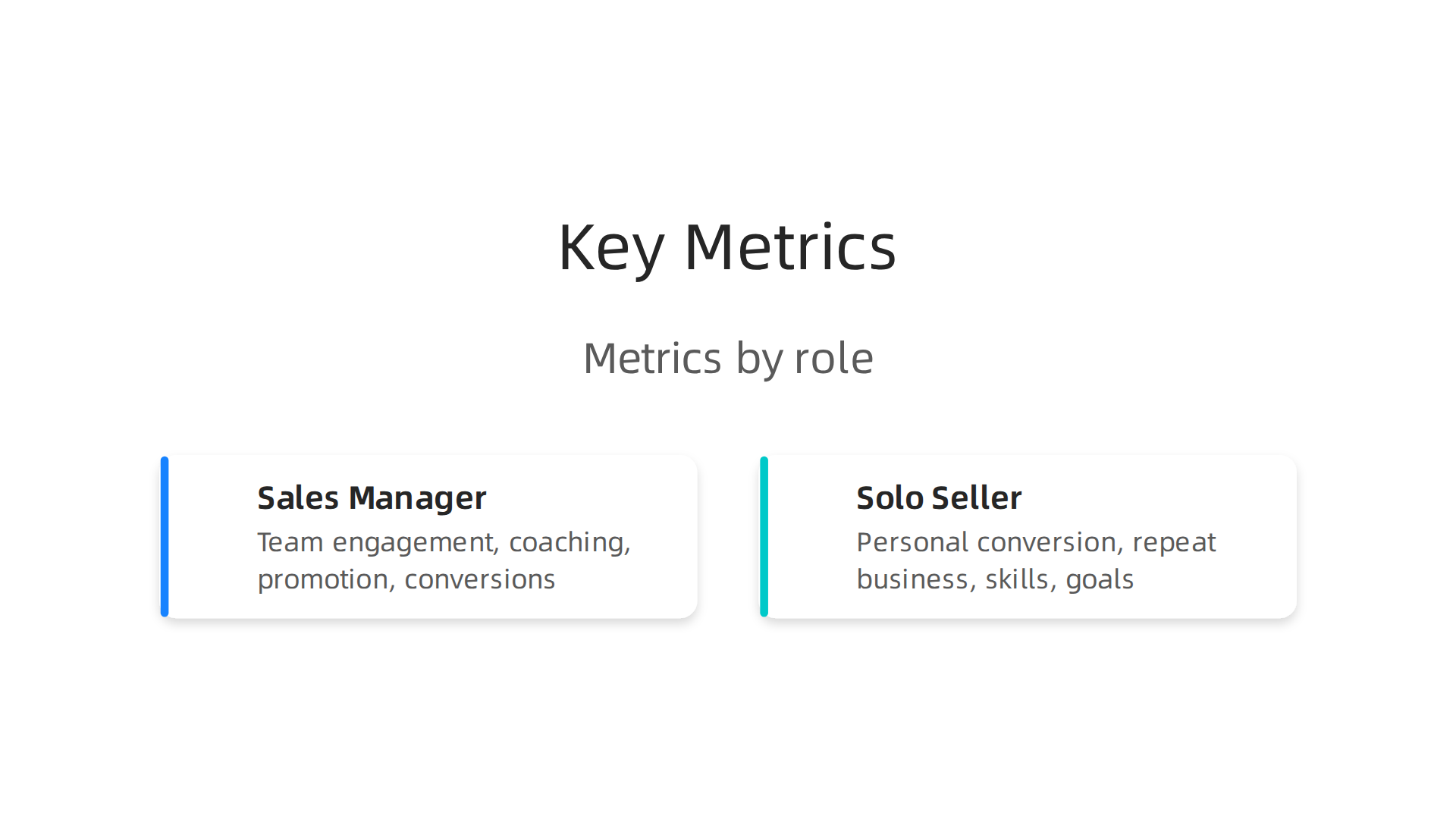
| Role | Key Metrics to Watch | How to Track (No Fancy Tools Needed) |
|---|---|---|
| Sales Manager | Team Engagement: How happy and involved the team is. Coaching Frequency: Number of one-on-one sessions. Promotion Rates: How many team members grow in their careers. Sales Conversion: Team’s success in closing deals. |
Simple weekly check-ins with team members. Keep a basic log of coaching sessions. Note down promotions in a spreadsheet. Use existing sales reports for conversion numbers. |

|
| Solo Seller | Personal Conversion Rate: How many leads you turn into sales.
Customer Repeat Business: How many clients buy from you again.
Skill Improvement: New techniques you’ve mastered.
Personal Goal Achievement: Hitting your own sales targets. | Use a small notebook or a simple spreadsheet to track your sales. Ask customers for feedback. Write down new skills you’re practicing. Keep a clear list of your own goals and check them off. |
Estimating How Much Your Leadership Helps (ROI)
It can be hard to put a dollar amount on leadership, especially for small teams. But you can still see the value, or "Return on Investment" (ROI), of a strong transformational leadership model. When you improve your leadership, you’ll likely see:
- More Sales: Better leadership often means more motivated sales people, which can lead to higher income [5].
- Happier Teams: People are more likely to stay when they have good leaders, which saves money on hiring and training new staff.
- Better Solutions: Encouraging new ideas means your team can find better ways to solve problems.
- Stronger Relationships: With clients and within your team.
By paying attention to these simple metrics, you can clearly see the positive impact of your transformational leadership style on your work and your team, helping everyone build purpose and growth.
Want to learn more about setting up clear plans for success in sales?
Explore proven systems for predictable growth
Even with a clear idea of what a transformational leadership model looks like and how to measure its effects, you might hit some bumps in the road. It’s like trying to build a new path through a forest; you might face thick bushes or big rocks. For small sales teams, especially in 2026, there are common hurdles when trying to grow with this kind of leadership.
What Makes It Hard?
- Not Enough Time: Everyone is busy, especially in sales. Finding extra time to coach, share vision, and inspire can feel tough. Sales leaders are often focused on hitting immediate targets, which can make it hard to invest in longer-term leadership development.
- "Show Me the Money" Mindset: Some people might be skeptical. They might think, "Why change what we’re doing if it’s already working, even a little?" This can make it hard to get everyone on board with new leadership ideas.
- Small Team Habits: In small teams, people get used to how things are. Changing those habits can feel strange or even scary. Also, constant change is a big challenge for sales teams in 2026, making it hard to settle into new ways of doing things [1].
- No Big Budgets: Unlike large companies, small teams usually don’t have a lot of money for fancy training programs or leadership coaches.
Simple Ways to Overcome These Roadblocks
The good news is you don’t need a huge budget or endless hours to make the transformational leadership model work. You can start small and smart.
- Start with Small Steps: Don’t try to change everything at once. Pick one area, like better coaching or clearer goals, and focus on that for a few weeks. Even small wins can build trust and show people the value. For sales leaders in 2026, clarity of vision and emotional stability are key traits for elite teams [2].
- Lead by Example: Show your team what transformational leadership looks like through your own actions. Inspire them, share your vision, and encourage them to think big, just as a transformational leader would [3]. When you’re excited about new ways to grow, your team often gets excited too.
- Use What You Have:
- Regular Check-ins: Instead of extra meetings, use your normal one-on-one chats or team meetings to inspire, listen, and offer guidance. These short talks can help build trust and address issues before they grow.
- Share Successes: When one person on the team tries a new sales approach inspired by your leadership and it works, celebrate it! This shows everyone else what’s possible and encourages them to try too.
- Simple Tools: You don’t need expensive software. A shared spreadsheet can track team goals, a whiteboard can hold new ideas, and simple notes can keep track of coaching topics.
- Focus on Growth and Learning: The world of sales is always changing, so learning new skills is important [4]. Encourage everyone, including yourself, to keep learning and trying new things. This focus on growth is a core part of transformational leadership and helps teams adapt.
- Build a Strong Vision: A transformational leader clearly states what the team is working towards and paints a picture of a better future [5]. Make sure your team knows the "why" behind their work. This gives them purpose and helps them grow, which is critical for thriving in 2026 [6].
By tackling these challenges head-on with practical, simple solutions, you can successfully build a strong transformational leadership style within your small sales team. It’s all about consistency, clear communication, and believing in your team’s potential.
Ready to put these leadership ideas into action and build a clear path to sales success? Explore proven systems for predictable growth.
Summary
This article explains the transformational leadership model and shows how small sales teams and solo sellers can use it to drive more consistent, motivated selling without big budgets. It defines the four core elements—idealized influence, inspirational motivation, intellectual stimulation, and individualized consideration—and explains why these translate into higher engagement, better handling of objections, and more reliable quota performance. The guide gives practical, low-cost daily actions for managers and individual sellers, plus training ideas like short courses, peer coaching, role-play, and micro-lessons. It also covers simple ways to measure progress using basic metrics such as coaching frequency, conversion rates, customer happiness, and personal skill growth. The piece addresses common roadblocks (time, skepticism, habits, budgets) and offers small-step solutions to build momentum. Readers will leave able to apply concrete leadership behaviors, set measurable goals, and begin a practical improvement plan to grow sales results and team capability.
Category
Sales Leadership
Written by

Published
April 19, 2026
More from the blog
Related reading





Next steps
Put the ideas from this article into practice
Explore related posts on the blog or reach out if you need a specific resource.
Sales Closing Course is a specialized affiliate content website focused on helping people learn and improve sales closing skills. The site publishes high-quality content about sales closing techniques, high-ticket sales training, objection handling, communication skills, closing frameworks, income p