
You know the feeling. You put in the hours. You make the calls. You send the follow ups. But your sales numbers just don’t move. Maybe you start wondering if you need help from a direct sales agency.

Then you hear about sales recruitment agencies, and things get confusing fast. Which one actually solves your problem?
Here’s the thing. Choosing the wrong sales model wastes your time and your money. Many small business owners and sales professionals jump into one approach without understanding the trade offs. They spend months trying to build an in-house team or hiring the wrong type of agency. And the result? Stagnant growth and more frustration.
In 2026, the direct selling industry continues to expand. According to the World Federation of Direct Selling Associations, the percentage of markets reporting growth climbed from 23% in 2022 to 45% in 2024. That shows a lot of people are exploring direct sales options. But "direct sales" can mean different things. A direct sales agency is not the same as a sales recruitment agency. Mixing them up can lead to costly mistakes.
If you are an SMB owner or a sales professional trying to grow your career, you need a clear way to compare these models. You need to know what fits your goals, your budget, and your team size.
That is exactly what this article delivers. We break down the differences between direct sales agencies and sales recruitment agencies. We share real research and practical tips. And we give you a simple decision framework so you can stop guessing and start growing.
By the end, you will know exactly which path to take.
If you are also exploring how to fast track your own sales career through an agency, check out our guide on how a recruitment agency for sales jobs can fast track your career in 2026. It pairs perfectly with what you are about to learn.
Direct Sales and Agency Models: Understanding the Fundamentals
Let’s make this simple. Imagine you are a small business owner with a great product but zero interest in managing a sales team. Or you are a sales pro looking for your next move. You need to know the difference between these two models.
Direct sales means you sell a company’s products straight to the end customer. Think of it like being an independent contractor. You work for one brand, you control your schedule, and you earn commission on what you sell. According to the US Direct Selling Association, this channel pulled in $34.7 billion in US retail sales through 2024. The whole global market is projected to hit $407.80 billion by 2033, as shown in the Grand View Research report. That is a lot of people selling directly.
The agency model works differently. Here, a sales agency sells products or services on behalf of multiple companies. They earn a fee or commission per sale. You are not tied to one brand. You represent several clients at once.
Now let’s look at the real differences.
| Feature | Direct Sales (Independent Contractor) | Agency Model (Sales Agency) |
|---|---|---|
| Compensation | Commission from one company. Income can vary a lot. | Commission or fee per sale from multiple clients. |
| Support | Training and materials from that one brand. | Less brand-specific support, more independence. |
| Autonomy | High control over your schedule and methods. | High control, but you manage multiple client relationships. |
| Income variability | Depends entirely on your sales for one product line. | More stable because you have multiple revenue streams. |
A study by Edgeworth Economics found that direct selling creates a huge economic impact across the US. But an agency model gives you more diversification.
So which one fits your situation? If you want total freedom and you love one brand, direct sales might be your path. If you prefer working with multiple products and want a steadier income base, an agency is a better bet.
Understanding this choice matters. It affects your income, your daily work, and your growth.
If you are curious about which path leads to better career opportunities, check out our guide on how a recruitment agency for sales jobs can fast track your career in 2026. It helps you see the agency side more clearly.
The Direct Sales Model: Deep Dive into Compensation, Autonomy, and Challenges
Now that you know the basic differences between direct sales and agency models, let’s pull back the curtain on what it really feels like to work in a direct sales agency. Whether you call it a direct sales company or a network marketing firm, the day-to-day reality is a mix of freedom, financial potential, and real struggles.
Compensation: High Ceiling, Wobbly Floor
In a typical direct sales setup, you earn commission only. No base salary. No hourly wage. You get paid when you sell. That means your income depends entirely on your effort and skill.
The upside is obvious. Top performers can earn a lot. The global direct selling industry continues to grow, with the World Federation of Direct Selling Associations reporting that 45% of markets saw growth in 2024. That means more people are buying through direct channels, and more money is flowing to sellers who know how to close.
But here’s the thing. That same commission-only structure makes income unpredictable. You might have a monster month followed by a dry spell. According to research from the Journal for Direct Selling Research, many distributors leave the industry because they can’t sustain consistent earnings. So compensation is a double-edged sword. The potential is massive if you have the skills and grit. But the instability is real.
Autonomy: You Are the Boss (and the Employee)
When you join a direct sales agency, you control your schedule.

You decide when to prospect, when to present, and when to follow up. No manager breathing down your neck. That freedom sounds amazing, and it is. But it also means you have to be self-motivated every single day.
Most new sellers underestimate how much discipline this takes. Without a structured environment, it is easy to procrastinate. You have to create your own routine, set your own goals, and hold yourself accountable. That is a skill many people never learned.
Challenges: Where Most People Trip Up
The biggest hurdles in direct sales are not about the product. They are about the process. One common mistake is poor product selection, as highlighted in a Qyral article on direct sales mistakes. If you sell something you don’t believe in or that doesn’t solve a real problem, rejection hits harder.
Lead generation is another tough nut. You can’t just wait for customers to knock on your door. You have to constantly find new people to talk to. That means cold messaging, referrals, social media outreach, and events. It’s a grind.
Rejection is part of the package. You will hear “no” a lot. Without proper training support, many sellers get discouraged and quit. The intelliverse blog on sales mistakes points out that rationalizing failures instead of learning from them is a common trap.
And scaling? That’s hard too. As a solo seller, your income caps at your personal time and energy. To grow, you need to build a team, which introduces a whole new set of leadership challenges.
If lack of training is your biggest concern, structured resources can help. Check out our guide on how an LMS corporate training platform solves your biggest sales training challenges. It shows you how to build the skills you need to survive and thrive in direct sales.
The Real Takeaway
The direct sales model is not for everyone. It rewards discipline, resilience, and continuous learning. If you can handle the income swings, manage your own time, and push through rejection, the upside is real. But if you need a steady paycheck and a structured support system, the agency model might suit you better. Understanding these trade-offs is what separates people who succeed from those who burn out.
The Agency Model: How It Works and Who Benefits Most
If the direct sales model felt like too much risk or isolation, the agency model might be your sweet spot. You still sell. But the way you earn, the support you get, and the control you have look very different. Let’s walk through how a direct sales agency actually operates when it represents multiple brands instead of just one.
How the Agency Model Works
In this model, you join an agency that represents several products or services. You do not own the inventory or the brand. The agency does. Your job is to sell what they offer to the right customers.
Think of a real estate agency. Agents do not build the houses. They sell them. They represent buyers and sellers across many properties. The same goes for insurance agencies or sales recruitment agencies. You work under one roof but sell many different things.
The agency handles contracts, compliance, marketing, and lead generation. You focus on selling.

That is a big difference from the direct model where you do everything yourself.
Compensation: Smaller Cuts with More Stability
In the agency model, you split commissions with the agency. Common splits in 2026 are 70/30 or 80/20. That means you keep 70% of your commission and the agency takes 30%. The Fathom Careers guide on brokerage choices in 2026 warns that these splits sometimes come with hidden desk fees, so always check the fine print.
Let’s say you close a $450,000 deal. The total commission is 5.5%. Your half is around $12,375. With a 70/30 split, you take home about $8,662.50. That is less than a direct seller would earn on the same deal. But the trade-off is consistency.
Many agencies offer a base salary plus commission. That means you get paid even during slow months. For people who cannot handle income swings, this is a lifesaver. The US Realty Training article on real estate agent commissions in 2026 explains that commissions remain the main income source for agents, but the structure is changing with new rules.
The Robinflow analysis on commission splits in 2026 makes a good point. Higher split percentages do not always mean higher income. What matters is volume, support, and how many deals you can actually close.
Benefits: Support, Tools, and Diversification
The agency model shines when it comes to support.
Training and onboarding. Most agencies have structured programs to teach you their process. You learn how to sell before you start selling. That is huge for new sellers or people switching careers. If you want to fast track your growth, working with a recruitment agency for sales jobs that offers training gives you a clear path.
Tools and technology. Agencies invest in CRM platforms, lead databases, and marketing materials. You get access without paying. That means you spend your time selling, not building systems.
Diversified income. Because you sell multiple products, you are not tied to one brand. If one product slows, another picks up. That lowers your risk compared to the direct model.
Borrowed reputation. A well-known agency gives you instant credibility. Customers trust the name. That makes cold outreach and conversations easier.
Drawbacks: Lower Per-Sale Income and Less Control
Lower commission rates. You split every deal. If you are a top performer, this can feel frustrating. You earn less per sale than a direct seller would.
Product overload. Selling many products means learning a lot. Some people love variety. Others get overwhelmed. If you struggle with information overload, this model requires extra discipline.
Reliance on agency reputation. If the agency gets a bad name, you feel the impact. Customers might avoid you because of the brand. You cannot fully control that.
Who Benefits Most
The agency model works best for people who want structure and stability. It is ideal for new sellers, career changers, and anyone who values team support over total independence. If you are just starting your sales jobs journey, the training and mentorship available in an agency can help you build skills faster than going solo.
For smb sales professionals who need flexibility without the risk of 100% commission income, the agency model offers a balanced middle ground. You get the earning potential of sales with the safety net of an established organization.
The choice between direct sales and agency comes down to your personality, your financial situation, and how much support you need. The agency model trades some upside for stability. For many people, that trade is worth it.
Direct Sales vs Agency Model: Head-to-Head Comparison
So you have seen how direct sales works. And you have seen how the agency model works. Now comes the hard part. Which one is right for you? Let us put them side by side. A table makes the trade-offs crystal clear. This will help you see the differences in earning potential, flexibility, training, risk, and scalability all at once.
| Criteria | Direct Sales Model | Agency Model |
|---|---|---|
| Earning Potential | Higher per deal (keep 100%) | Lower per deal (70/30 or 80/20 split) |
| Flexibility | Total control over schedule and strategy | Structured schedule and brand guidelines |
| Training | Self taught or expensive private coaching | Structured programs and mentorship |
| Risk | High (no base salary, big income swings) | Low to moderate (base salary often available) |
| Scalability | Harder (must build own brand and systems) | Easier (leverage established brand and leads) |
The numbers tell a clear story. In the direct model you earn more per sale. But you carry all the risk. The direct selling channel hit $34.7 billion in US retail sales recently, according to the US Direct Selling Association. That is a massive market. And because you keep everything, a single good month can feel amazing.
But here is the trade-off. In the agency model, you trade that upside for safety. A 70/30 split means you keep less. But you get leads, tools, and training. And honestly, the cost difference between the two models might surprise you. A recent study showed that the net cost difference between franchised dealerships and direct sales is only about $200 per vehicle. That tells us the gap in real costs is shrinking.
Think about a real estate agent. If they go direct, they build their brand from scratch. They handle their own marketing. Every dollar goes to them. But they also pay for everything. An agent at a big brokerage, on the other hand, follows the brokerage guidelines on commission splits. They earn less per deal, but they have a whole team supporting them.
If you are leaning toward the agency model for the support and structure, working with a recruitment agency for sales jobs can fast track your career. That safety net helps you build skills faster than going it alone.
For smb sales professionals, the choice is personal. The direct model suits self starters who want unlimited upside. The agency model suits people who want to grow within a system. Both can lead to a great career. The key is knowing yourself first.
Choosing the Right Sales Model: A Decision Framework for Your Goals
By now you know the differences between the direct sales model and the agency model. But how do you actually pick?

Here is a simple framework to help you decide.
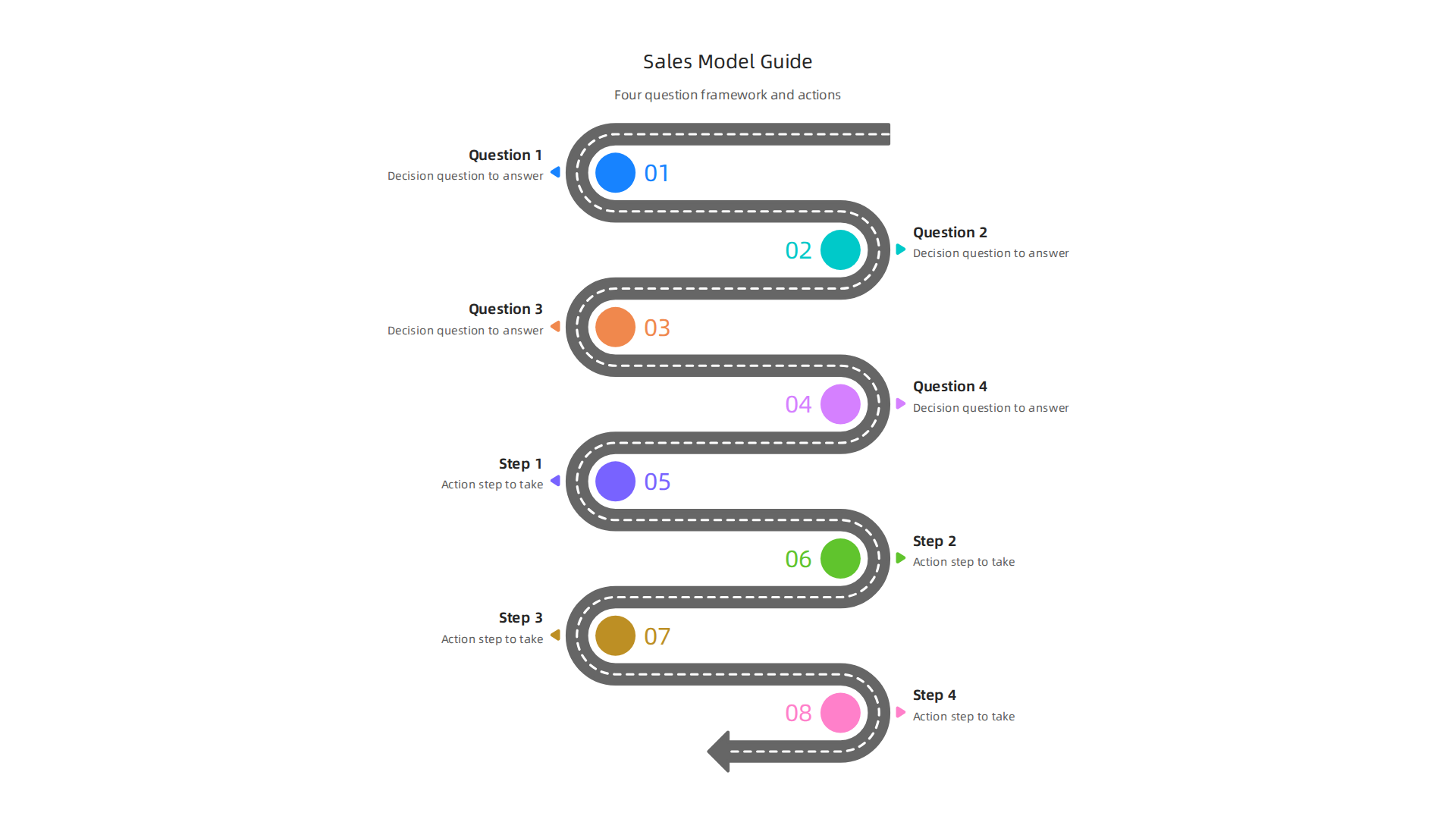
Ask yourself these four questions
1. What is your risk tolerance? In direct sales, your income swings wildly. One month you crush it. Next month you might earn nothing. If you need steady paychecks, the agency model wins. If you can handle the ups and downs, direct sales gives you more upside.
2. How much income do you need right now? If you have savings or a partner’s income, you can take more risk. But if you have bills due every month, a base salary from an agency might be a lifesaver. Many sales agencies offer base pay plus commission.
3. How do you learn best? Some people thrive by figuring things out alone. They watch videos, read books, and practice. Others need structured training and a mentor. If you need guidance, an agency with a training program will help you grow faster. If you are a self-starter, direct sales might work.
4. What are your career ambitions? Do you want to build your own brand and maybe start a team? Direct sales lets you create your own business. Or do you want to climb the ladder within a company? Agencies often have clear promotion paths.
Your step-by-step action plan
- Step 1: Assess your current situation. Look at your bank account, your monthly expenses, and your safety net. Write it down.
- Step 2: Evaluate model fit. Match your answers from the four questions against the table from the previous section.
- Step 3: Leverage resources. Use sales recruitment agencies to find agency roles. For direct sales, connect with industry groups or use the DOL’s proposed contractor rule to understand your legal status.
- Step 4: Test. Try one model for 90 days. See how it feels. You can always switch later.
One more thing to watch out for
In 2026, the Department of Labor proposed a new rule that changes how independent contractors are classified. This could affect direct sales roles where you work as a 1099 contractor. According to the DOL’s proposed rule, a five-factor test will determine your status. If this rule goes through, some companies may reclassify workers as employees. That could push more sales roles toward the agency model. Keep an eye on this.
Your choice can change over time
What works for you today might not work in five years. Maybe you start at an agency to learn the ropes. Then later you go direct to earn more. Or you go direct first and later join an agency for stability. The right answer is not permanent.
The key is to start somewhere. Pick the model that fits your life right now. And if you want help finding agency roles that offer great training, check out how a recruitment agency for sales jobs can fast track your career. They can connect you with companies that fit your goals.
Essential Skills That Succeed in Both Direct Sales and Agency Models
So you have picked your model. Now let us talk about the skills you need to thrive in either one.
Here is the truth. The core abilities that make you valuable in a direct sales agency are the same ones that make you stand out at a traditional sales agency.
Master these, and you can move between models freely.
Hard skills you cannot skip
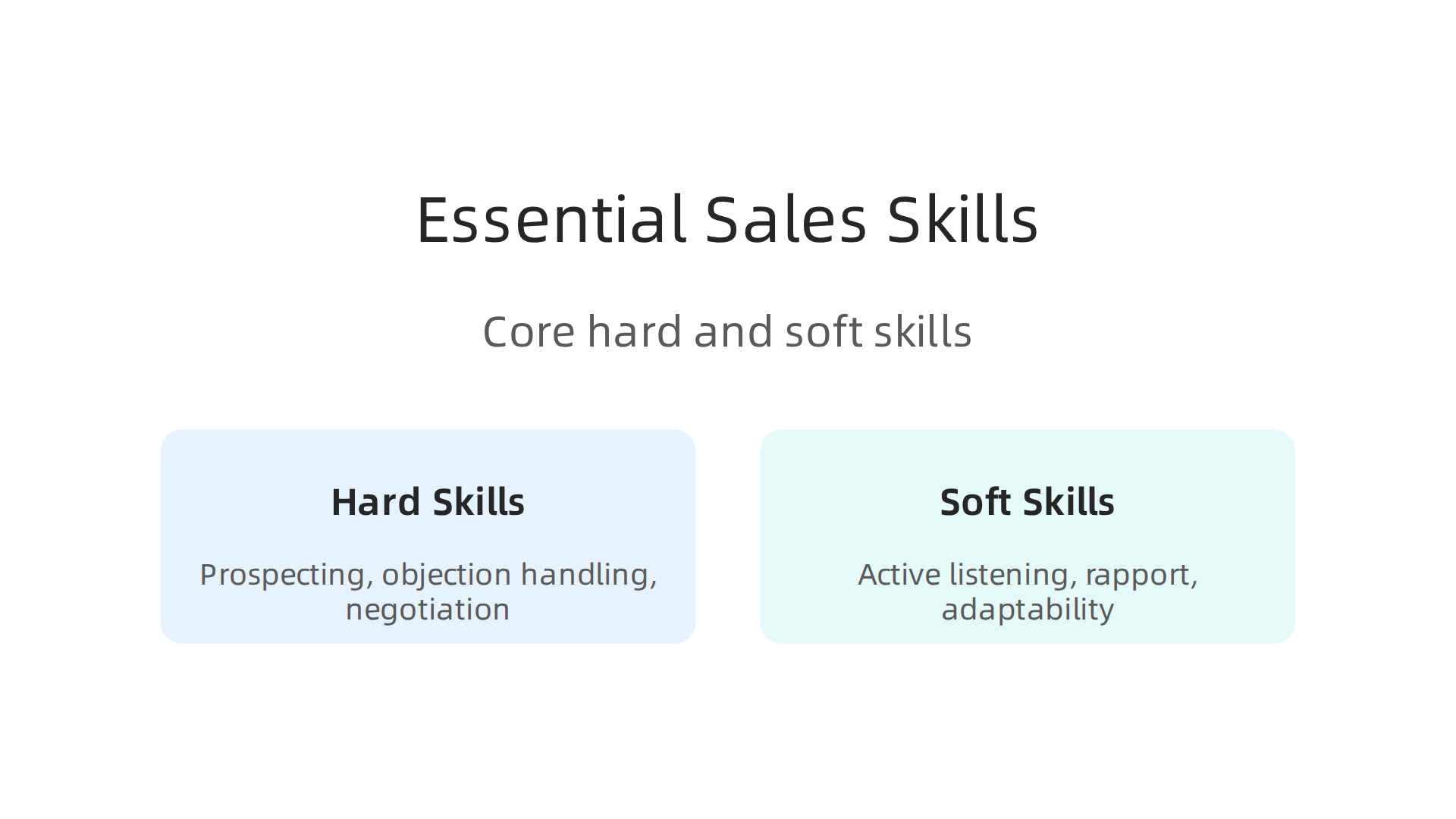
First up is prospecting. You need to find leads consistently. In 2026, that means using verified data and smart research. According to Prospeo’s guide on improving sales skills, the top three focus areas are discovery questioning, objection handling, and prospecting.
Then comes objection handling. Every day you will hear "not interested" or "too expensive." Learn to turn those into conversations. A Cognism article on objection handling outlines practical scripts that work in 2026. And for deeper training, you can find free methods in this training material on handling objections.
Negotiation is another must. You cannot close deals if you cannot handle pricing pushback. Our article on how to master price negotiation gives you a framework that applies to both models.
Soft skills that separate top performers
Active listening matters more than talking. So does building real rapport fast. And adaptability? Huge. Markets shift, rules change, and your product lineup shifts too.
The good news is that soft skills can be learned. Check out our guide on soft skills training that boosts sales performance for actionable drills.
How to learn all this for free or cheap
You do not need a big budget. In 2026, tons of free resources exist. Badger Maps compiled 39 free resources including AI tools, podcasts, and courses. Revenue.io also lists 10 free training resources worth exploring. And Sales Gravy offers a full library of free guides from Jeb Blount.
Sybill’s roundup of free sales training programs teaches prospecting basics, qualification frameworks, and sometimes even a certification badge. All at zero cost.
Pick one skill each week. Drill it for 10 minutes daily. That is how real growth happens.
Common Pitfalls and How to Avoid Them (Objection Overload, Income Instability, Burnout)
Even with strong skills, a direct sales agency path has real traps. I have seen talented people crash because they did not see these coming. Let me walk you through the three biggest pitfalls and how to sidestep each one.
Objection overload
You will hear "too expensive," "not now," or "I do not trust you" every single day. It wears you down fast. The trick is to stop defending and start questioning. When someone says the price is too high, ask what budget they had in mind. When the timing is wrong, ask what would make it right. When trust is the issue, share a relevant success story or third party proof. A structured 4 step approach like the one in this guide on handling objections turns those rejections into real conversations. And for pricing pushbacks specifically, our framework on how to master price negotiation gives you exact scripts that work across all sales agencies.
Income instability
Some months you feel like a king. Other months are painfully slow. That is the reality of commission based work. The fix? Diversify your pipeline. Do not rely on one source of leads or one product line. Also, set aside a portion of every good check into a safety net. Learn from the common mistakes highlighted in this Qyral article on direct sales pitfalls. And if you are considering more stable options, our guide on how a recruitment agency for sales jobs can help you find a path with steadier pay.
Information overload
There is so much sales advice out there. Blogs, podcasts, videos, courses. It is easy to get stuck consuming instead of doing. Curate your sources ruthlessly. Stick to one or two trusted experts. The Badger Maps list of 39 free resources is a great starting point because it filters out the noise. Focus on actionable tactics you can apply today, not theory you will forget tomorrow. Our article on soft skills training that boosts performance is a good example of a focused resource that gives you real drills, not just ideas.
Avoid these three traps, and your direct sales agency journey stays smooth and profitable.
The Future of Sales Models in 2026: Trends Shaping Direct Sales and Agency Work
You have made it past the traps. That is good. Now let us look at what is coming next. The world of sales agencies and the direct sales agency model is changing fast in 2026. Three big trends will shape your options this year.
Remote sales and digital tools are lowering the barriers
You no longer need a fancy office or a big local network to start. Cloud based CRM platforms and video calling tools let you run a sales agency from anywhere. That opens the door for more people to enter the field. Our guide on choosing the best CRM software for sales growth in 2026 can help you pick the right tool for your remote setup.
Regulation changes are affecting independent contractors
This is a big one for anyone running a direct sales agency. In February 2026, the U.S. Department of Labor proposed a new rule that changes how independent contractors are classified.
The proposed rule brings back a five factor economic realities test to decide who counts as an employee versus a contractor. According to the DOL’s announcement, this could affect how you structure your work with sales agencies. The public comment period recently closed, so changes may come soon. Stay informed on how this DOL rule for SMBs could impact your business.
Hybrid models are on the rise
More salespeople are blending direct sales with agency work. They take a base role through sales recruitment agencies while also running their own direct sales on the side. This hybrid approach gives you stability plus upside. It is a smart way to smooth out those income swings we talked about earlier.
Understanding these trends helps you stay ahead. The direct sales agency model is not going away. It is just evolving.
Summary
This article explains the difference between direct sales (independent contractor) and agency models so you can pick the right path for your sales career or small business. It breaks down compensation, autonomy, training, risk, and scalability, showing how direct sales offers higher per‑deal upside but greater income swings while agencies provide training, tools, and steadier pay via commission splits or base salaries. You’ll find a head‑to‑head comparison, a four‑question decision framework to match choices to your finances and learning style, and a 90‑day testing plan to try a model without committing permanently. The guide also lists essential hard and soft skills, common traps like objection overload and burnout, and practical fixes such as pipeline diversification and focused practice. Finally, it flags 2026 trends — remote tools, hybrid approaches, and a proposed DOL contractor rule — so you can plan around regulatory and market shifts.