How an LMS Corporate Training Platform Solves Your Biggest Sales Training Challenges

Introduction
If your sales team is struggling to keep up with new products, shifting buyer habits, and remote work, you have probably looked for a better way to train them. That is where a strong lms corporate training platform comes in. It helps you deliver the right lessons to the right people without endless meetings or outdated binders.
The global corporate learning management system market is getting huge. Reports show it was worth billions in 2024 and is expected to keep growing fast through the 2030s cite market report. But here is the problem. Most generic platforms are built for HR checklists or compliance rules. They do not understand the speed of a real sales environment.
You need tools that work like your best sales manager does. That means training that connects directly to closing deals, handling objections, and using systems like salesforce training courses or relias training effectively. Generic solutions often fall short because they do not teach the specific communication skills that drive revenue.
That is why we wrote this guide. We looked at what makes specialized programs like business training works different from one-size-fits-all options. And if you want to build stronger people skills alongside your tech stack, check out our guide on soft skills training that boosts sales performance and ROI.
Stick with us. We will show you exactly how to pick and set up the right system so your team can sell more without wasting time or money.
What Is an LMS Corporate Training System and Why Does It Matter for Sales?
You have probably heard the term LMS. It stands for Learning Management System. Think of it as a digital hub where you build, deliver, and track employee training. For years, companies used LMS platforms mostly for compliance stuff like safety videos or HR onboarding. But those old systems were slow and boring. They did not help salespeople sell more.
Here is what changed. Modern lms corporate training platforms have evolved into powerful sales enablement tools. They now include features like artificial intelligence that personalizes lessons for each rep. They use microlearning, which means short 5 minute modules instead of hour long lectures. And they come with analytics that show you exactly where your team is struggling with things like objection handling or product knowledge.
The market agrees this shift matters. A recent study shows the global LMS market is expected to grow from $26.76 billion in 2024 to $61.21 billion by 2029 cite growth forecast. That is huge. Companies are investing because they see real results.
Now think about the pain points your sales team faces every day. Information overload from too many manuals. Outdated techniques that no longer work with modern buyers. And inconsistent performance where one rep crushes quota while another falls behind. A modern LMS solves all three. It delivers the right training at the right moment, keeps content fresh, and gives every rep the same high quality lessons.
For sales specifically, this matters because training connects directly to closing. When you use a system designed for sales workflows, you can align lessons with your CRM, track progress against deals, and quickly fix weak spots. If you want to see how structured training can create predictable growth, check out our guide on how a management right sales system drives consistent results.
Bottom line: an LMS is no longer just a checkbox tool. It is a strategic asset that helps your team sell smarter and faster.
Top 5 Pain Points in Sales Training That an LMS Can Solve
Let’s be honest. Training your sales team the old way is painful. You schedule a day long workshop, lose half a week of selling time, and a month later nobody remembers the material. That is the reality for most teams today. In fact, data from 2026 shows that sales teams still struggle with bad data, quota gaps, and burnout cite sales challenges. But here is the good news. A modern lms corporate training system can fix these exact problems. Here are the top five pain points it solves.
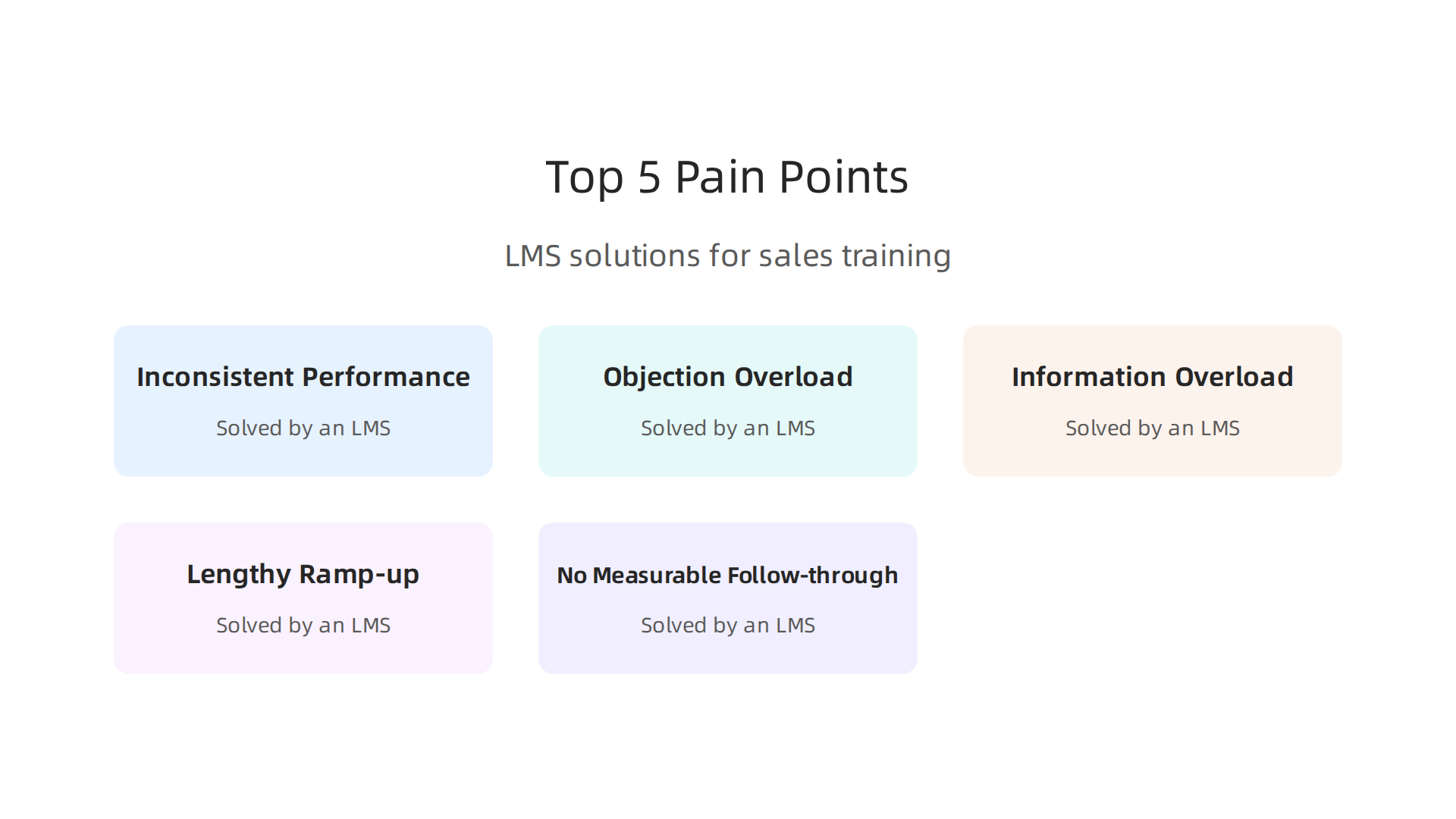
1. Inconsistent sales performance. One rep crushes quota every month. Another barely hits half. Sound familiar? The difference is often just access to the right training at the right time. An LMS gives every team member the same structured, on demand lessons. No more relying on memory from a workshop six months ago. Your best practices become repeatable. Your weaker reps get the same quality content as your top performers. The result is a more consistent team across the board. If you want to dig deeper into what makes sales performance consistent, check out our guide on soft skills training that boosts sales performance and ROI.
2. Objection overload. Buyers today come armed with research and skepticism. They push back on price, timing, and value constantly. Most sales training barely touches how to handle this. An LMS solves it with simulated role-play and scenario libraries.

Your reps can practice handling tough objections inside the platform, get feedback, and try again. No pressure. No lost deals. Just repetition that builds real skill.
3. Information overload. Think about your current sales manual. It is probably huge, packed with product specs, pricing tiers, and competitive comparisons. New reps get buried. Experienced reps ignore it. An LMS breaks everything into bite sized, repeatable modules. Five minutes here. Ten minutes there. Your team learns without drowning. This builds confidence fast because the information sticks.
4. Lengthy ramp up times. Bringing a new salesperson to full productivity takes months in many organizations. An LMS compresses that timeline. New hires can access foundational training on day one, move at their own pace, and start contributing sooner.

Leading teams already use this approach to reduce ramp times and improve early win rates cite sales training trends.
5. No measurable follow through. After a training session, how do you know what stuck? With an LMS, you get analytics. You see who completed what module, where they scored lowest, and which topics need reinforcement. No more guessing. You fix the actual weak spots.
The bottom line: these pain points drain your bottom line. An LMS is the tool that removes them.
Essential Features to Look for in a Sales-Focused LMS
So what should you look for when choosing the right tool for your team? Not every lms corporate training platform is built for sales. Some are too general. Others lack the specific tools your reps actually need.
Here are three essential features that separate a good LMS from a great one.
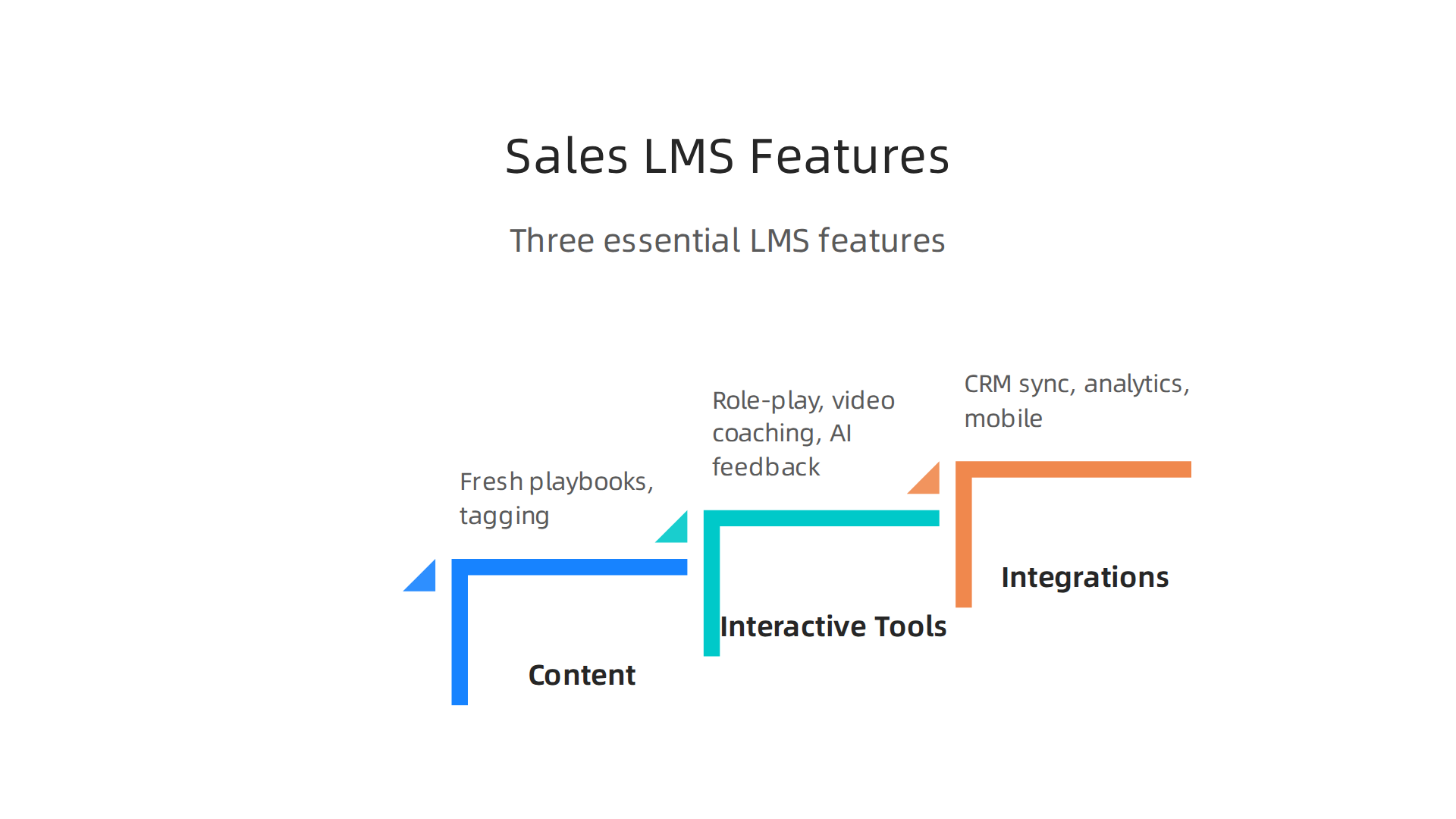
1. Content management that keeps playbooks fresh
Your sales playbook is your team’s bible. But it changes fast. Pricing updates. New competitor intel. Fresh objection scripts. You need an LMS that lets you create, upload, and update this content quickly.
Look for a platform where you can drop in a new objection handling guide in minutes. You should be able to organize content by topic, role, or deal stage. The best systems let you tag content so reps find exactly what they need when they need it.
This matters more than you think. Top sales teams in 2026 use AI coaching tools to keep content relevant and personalized cite State of Sales Training. If your LMS makes updating a pain, your playbook will sit stale. And your reps will go back to winging it.
2. Interactive tools that build real skill
Reading a PDF is not training. Watching a video is not enough either. Your reps need to practice in a safe space. That is where interactive tools come in.
A sales-focused LMS should include:
- Role-play simulations where reps handle tough buyer scenarios
- Video coaching so they can record pitches and get feedback from managers

- AI-driven feedback that scores performance and suggests improvements
Data from 2026 shows that sales training trends lean heavily toward AI powered coaching and micro learning cite Retorio trends. This is because repetition with feedback builds confidence faster than any session ever could. If your LMS only offers static content, your team will not improve their communication skills where it counts.
And if you want to help your reps build confidence in real conversations, check out our guide on soft skills training that boosts sales performance and ROI.
3. Integration capabilities that connect your tools
Here is the thing. Your sales team already uses a bunch of tools every day. Your CRM. Your email platform. Your analytics dashboards. A disconnected LMS is just another log in they ignore.
Your LMS needs to talk to your existing stack. Specifically:
- CRM sync with platforms like Salesforce and HubSpot
- Analytics dashboards that show completion rates, quiz scores, and skill gaps
- Mobile accessibility so reps can train on the go between calls
When your LMS connects to your CRM, training activity becomes part of the deal data. You see which reps who completed objection training closed more deals. This is how you prove ROI.
Actually, leading teams already use this approach to reduce ramp times and improve early win rates cite sales training trends. Without integration, you are flying blind.
If you are still choosing a CRM, make sure it plays well with your LMS. We have a breakdown of best CRM software for sales growth that can help you decide.
The one more thing to consider
Beyond these three features, think about how easy the platform is to navigate. If your reps struggle to find the next module, they will not use it. Look for a clean interface with clear progress tracking.
And if you want to build a complete sales training ecosystem, start with the right tools. You can also explore relias training or business training works for broader options, but remember that sales focused platforms give you the edge.
The right LMS does not just store content. It helps your team practice, get feedback, and improve every single day. That is how you turn average reps into consistent closers.
Comparing the Best LMS Corporate Training Platforms for Sales in 2026
Now you know what features to look for. But which platforms actually deliver? The corporate LMS market is growing fast. Experts estimate it will reach over $27 billion by 2030 Grand View Research. With so many options, picking the right one can feel overwhelming.
Here is how five leading platforms stack up for sales teams in 2026. We compared them on ease of use, sales-specific content, pricing, analytics, and integrations.
Docebo
Docebo is a strong choice for growing teams.
It uses AI to suggest content and automate tasks. That saves time for managers. Docebo also offers a built-in content marketplace with sales-specific courses.
- Best for: Teams that need scalability and AI-powered learning paths.
- Pain point match: Helps with budget because you only pay for features you use. Builds confidence through personalized coaching.
- Downside: Can be pricey for small teams. Setup takes some work.
SAP Litmos
SAP Litmos focuses on compliance and analytics.
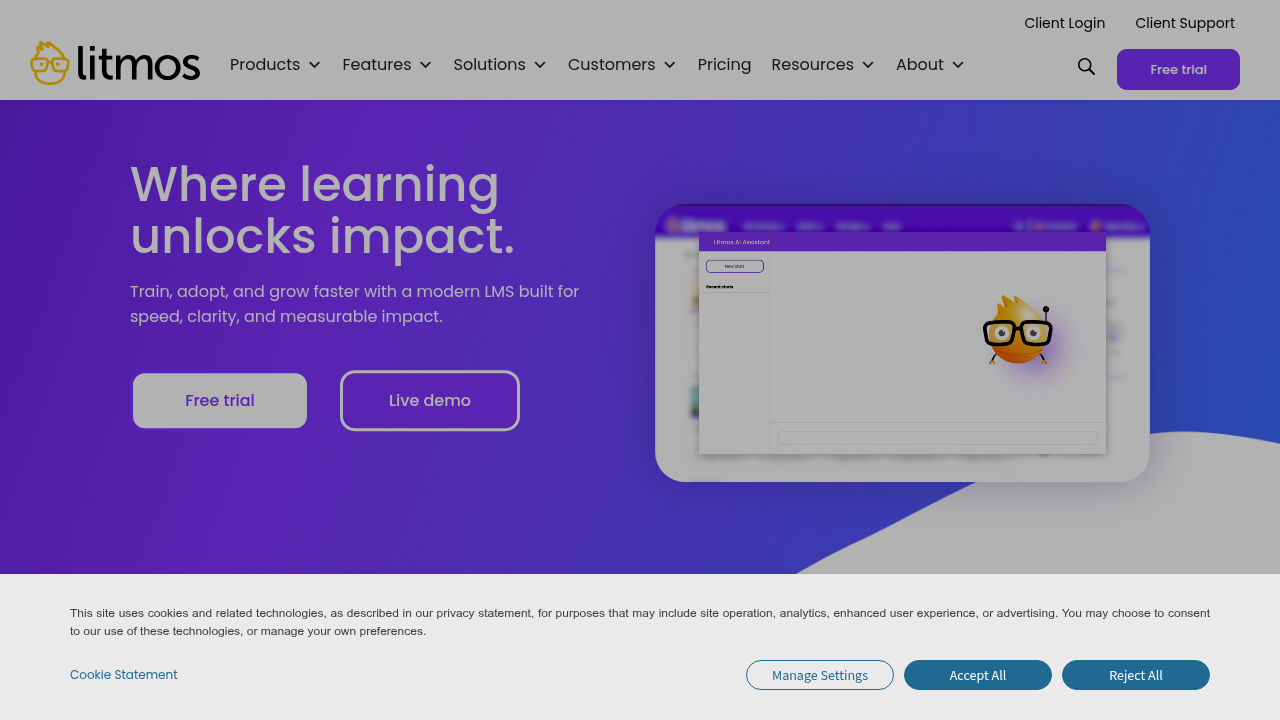
That is great for regulated industries. It also offers pre-built sales training content and strong reporting.
- Best for: Enterprises that need detailed tracking and compliance.
- Pain point match: Gives managers clear data on skill gaps, which helps with career growth planning. Reps see their own progress, boosting confidence.
- Downside: Interface can feel less modern. Sales-specific features are not as deep as dedicated platforms.
Cornerstone
Cornerstone is a full talent management suite. It connects learning with performance reviews and career development. This is ideal if you want to tie training directly to promotions.
- Best for: Organizations focused on long-term career growth.
- Pain point match: Directly addresses the goal of career advancement. Reps can build skills that lead to higher roles.
- Downside: Overkill if you only need sales training. Complex to set up.
Lessonly by Seismic
Lessonly was built specifically for sales enablement.
It makes creating and updating playbooks easy. Reps practice with role-plays and receive feedback from managers.
- Best for: Sales teams that want fast content creation and interactive practice.
- Pain point match: Builds confidence through real practice. Keeps playbooks fresh, which helps close more deals. Pricing is reasonable for small to mid teams.
- Downside: Less suited for company-wide compliance training. Analytics are solid but not as deep as enterprise platforms.
360Learning
360Learning focuses on collaborative learning.
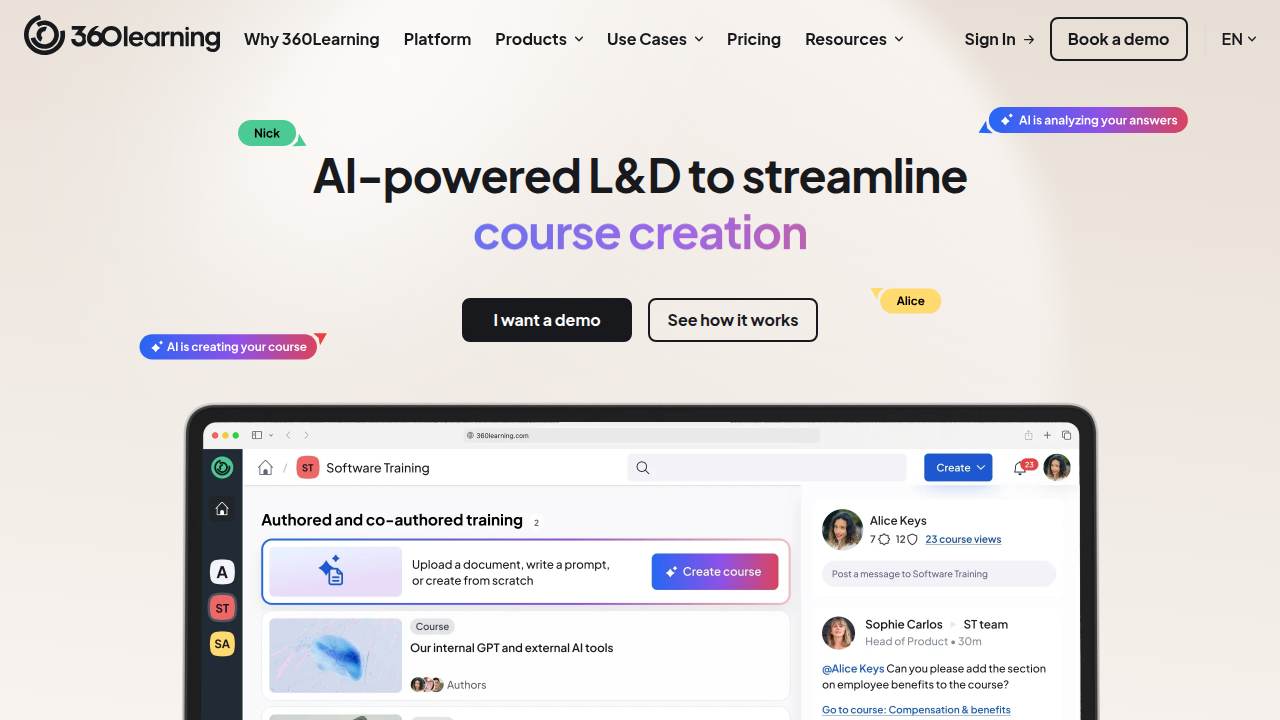
Anyone can create courses. This works well when your top reps share their best techniques.
- Best for: Teams that want to build internal expertise fast.
- Pain point match: Low cost makes it budget friendly. Reps gain confidence by learning from peers. Encourages career growth through teaching.
- Downside: Less structured if you need strict compliance tracking.
Which one should you choose?
It depends on your priorities.
- If you need AI and scalability, go with Docebo.
- If compliance and detailed analytics matter most, try SAP Litmos.
- For career development tied to training, Cornerstone shines.
- If you want a sales-focused tool that is easy to use, pick Lessonly by Seismic.
- For collaborative learning on a budget, choose 360Learning.
No matter which platform you pick, the key is to match it with your team’s goals. If you are also thinking about how to structure career paths, our guide on sales assistant roles and career advancement can help you think about the bigger picture.
The LMS market is expected to keep growing eSkilled. That means more options are coming. For now, these five platforms give you a strong starting point. Pick one, start training, and watch your team’s confidence and closing rates rise.
How to Implement an LMS for Sales Training: A Step-by-Step Guide
You picked a platform. Great. Now comes the real work: getting your sales team to actually use it. Many LMS corporate training rollouts fail because people skip the planning phase. In 2026, top teams are doing things differently. Here is a simple three-step process.
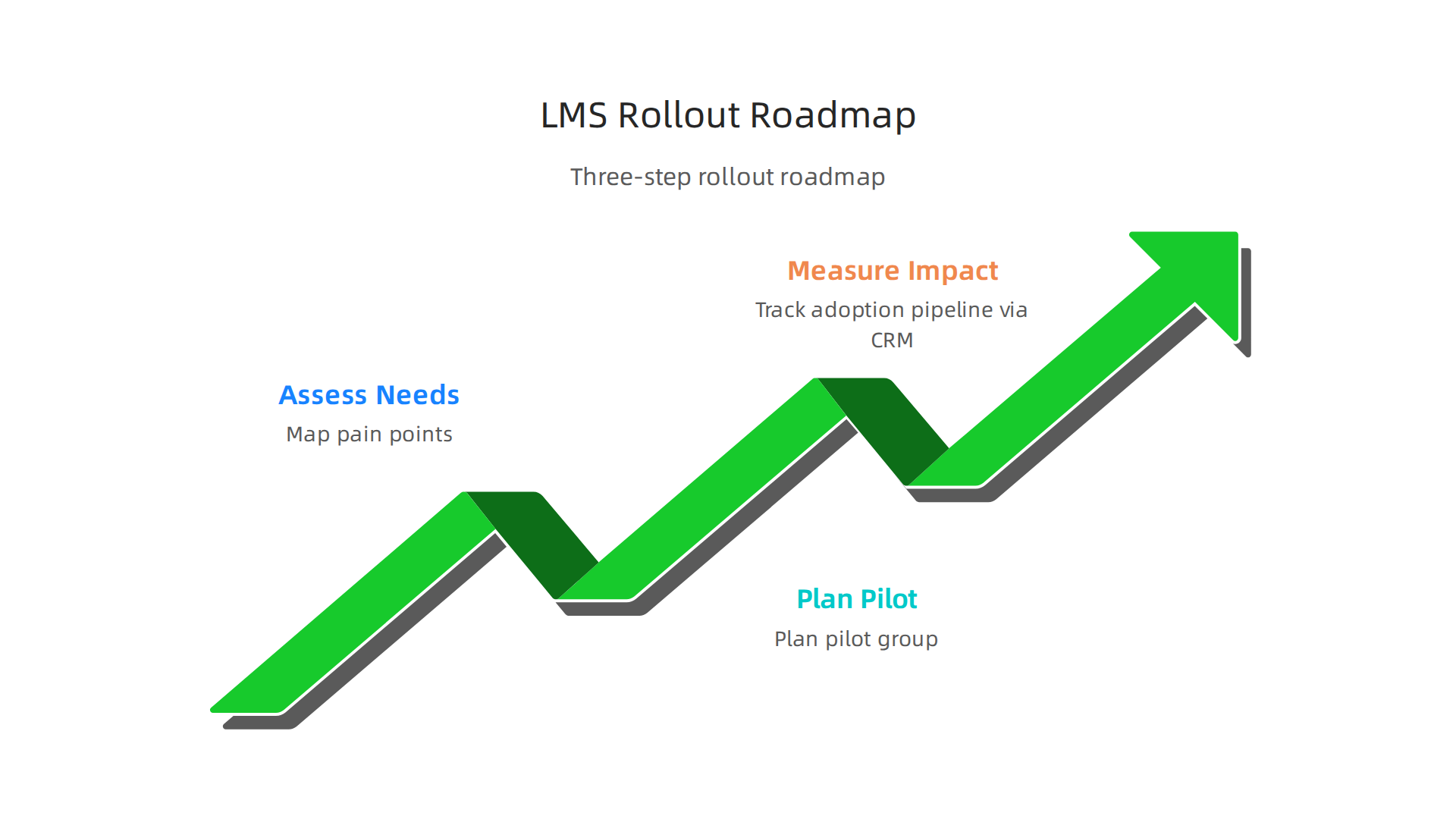
Step 1: Assess Your Needs and Map Pain Points to Features
Before you invite anyone to a login page, stop. What are your sales reps struggling with right now? The biggest sales challenges in 2026 include quota gaps, bad data, and burnout Prospeo. Your LMS should address those specific problems, not just check a box.
- Talk to your reps. Ask what holds them back during calls. Is it objection handling? Product knowledge? Lack of confidence?
- Map each pain point to an LMS feature. For example, if reps struggle with objections, choose a platform that offers role-play and feedback tools.
- Involve sales reps in the platform selection. When they feel heard, adoption jumps. A recent report shows that teams who include sellers in training decisions see higher win rates Second Body.
You might also want to check our guide on soft skills training that boosts sales performance and ROI to see how communication and listening fit into your LMS plan.
Step 2: Plan the Rollout with a Pilot Group
Do not launch to everyone at once. Pick a small pilot team first. These early users become your champions. They test the content, give feedback, and create buzz.
- Choose 5 to 10 reps from different experience levels.
- Set up champion users who can answer questions and model behavior.
- Integrate your LMS with your CRM right away. This syncs training data with real sales activity. If you are choosing a CRM, see our breakdown of the best CRM software for sales growth in 2026.
Sales training trends for 2026 point to micro-skills and AI-driven coaching as key Retorio. Your pilot phase is the perfect time to test these features on a small scale before the full launch.
Step 3: Measure Adoption and Impact on Your Pipeline
Once the training is live, you need to track whether it is working. Do not just look at completion rates. Connect the dots to real outcomes.
- Monitor quiz scores and role-play performance.
- Track time-to-competency for new hires.
- Measure how training affects pipeline metrics, like deal size and close rate.
The 2026 sales training research shows that analytics are everything Funnel Clarity. If your LMS offers AI insights, use them to spot skill gaps early.
Also, consider career growth. When reps see that training leads to promotions, they engage more. Our article on sales assistant roles and career advancement shows how building skills through training can open doors.
A Note on Sustainable Training Culture
The real secret is consistency. Do not treat your LMS as a one-time event. Keep content fresh. Let top reps contribute their own lessons. And mix in other formats like live coaching and peer practice. Future sales training strategies emphasize human-centric selling alongside tech Infopro Learning.
Your LMS corporate training investment pays off when you build a habit, not just a library. Start small, listen to your reps, and keep measuring. Your team’s confidence and closing rates will tell you if you are on the right track.
Measuring ROI: How to Prove Your LMS Investment Pays Off
So you rolled out your LMS and your team is taking courses. But here is the big question every leader asks: Did it actually make a difference? In 2026, proving the value of your LMS corporate training investment is not optional. It is how you keep the budget and show real results. Let us look at the numbers that matter and how to calculate them.
Start with three key metrics.
First, time to productivity. How long does it take a new rep to hit their first full quota? Second, quota attainment. The data shows that coached reps meet 17% more quota than those without training Apollo.io. Third, win rate improvement. If your close rate goes up after training, your LMS is working.
To isolate the LMS impact, use a simple comparison. You need a control group or a before and after snapshot. For example, compare the win rates of a team that took a specific course against a team that did not. Or look at the same team’s performance three months before training and three months after. This method helps you see the true effect of your LMS, not just seasonal trends Revenueify.
Now for the formula. It is straightforward:
ROI = (Gain from Training minus Cost of Training) divided by Cost of Training
Multiply by 100 to get a percentage. The gain includes extra revenue from higher close rates, faster onboarding, and reduced ramp time. In 2026, top performing sales training programs deliver an average ROI of 353% Apollo.io. That means for every dollar you spend, you get back more than $3.50.
You can track these gains by integrating your LMS with your CRM.

That gives you direct visibility into deal sizes, cycle times, and quota attainment. If you need help picking the right tool, check out our guide on the best CRM software for sales growth in 2026. It shows how CRM data feeds directly into your ROI calculations.
Remember, training is a critical performance requirement, not a nice to have Integrity Solutions. When you can show a clear return on your LMS corporate training spend, you earn the right to expand the program. Keep measuring, keep proving, and your team will keep growing.
Overcoming Common Challenges When Adopting a Sales Training LMS
Getting a new LMS in front of your sales team sounds great in theory. In practice, it can hit roadblocks. Reps ignore the platform. You bought too many features. Leadership is not convinced. These are common, but solvable.
Combat resistance by showing immediate value. Salespeople are busy. They will not log in just because you told them to. They need a payoff fast. Use microlearning. Start with short lessons tied to daily tasks. A five minute module on handling an objection or a quick video using specific salesforce training courses. When reps get a quick win, they come back for more. This approach is central to a strong LMS adoption strategy in 2026 Thirst.
Avoid feature overload by starting small. Many LMS platforms have tons of tools. Gamification, VR, social learning. Do not turn everything on at once. Pick core features that solve your biggest problem first. Simple course assignments and progress tracking. Then add more later. The best LMS platforms for sales training in 2026 grow with your team Absorb LMS.
Ensure executive buy-in by connecting LMS usage to revenue. Leaders care about results. Show how your LMS corporate training impacts the bottom line. Faster ramp time. Higher close rates. When you can say "this module helped close 10% more deals," you get attention. Build a solid business case before you start Acorn. And do not forget soft skills. They drive real outcomes too. Check out this guide on soft skills training that boosts sales performance and ROI to round out your program.
The bottom line: start small, prove value fast, tie everything to revenue. Your team wins. Your bottom line wins too.
Future Trends: AI, VR, and Microlearning in Sales Training LMS
The way we train sales teams is changing fast. In 2026, three big trends are reshaping lms corporate training: AI personalization, VR role-play, and microlearning. These tools make training more effective and less painful for busy reps.
AI tailors training to each person. Imagine a system that watches how a rep performs and then serves them content that fixes their exact weak spots. That is what modern AI does. It finds skill gaps and adjusts lessons on the fly. No more wasting time on stuff you already know. This kind of smart personalization is a top trend for 2026 according to industry analysts LearningOS. Platforms that use AI create a learning path that fits each individual, not a one-size-fits-all course.
VR practice feels real without the travel cost. Traditional role-play works, but it is awkward and hard to scale. Virtual reality changes that. A rep can put on a headset and practice a tough cold call or a price negotiation with a lifelike avatar. No real customers get annoyed. No manager has to watch every session. The VR training market is huge and growing fast. In fact, the global market for VR in education is set to grow from $24.24 billion in 2026 to over $83 billion by 2034 Fortune Business Insights. More than 75% of Fortune 500 companies already use VR for training Mazerspace. Your team can join them and practice high-stakes conversations safely.
Microlearning fits into crammed schedules. Sales reps do not have two hours for a classroom session. They have five minutes between calls. Microlearning delivers short, focused lessons that take under ten minutes. A video on handling an objection. A quick quiz on product features. These bite-sized pieces stick better too. When you pair microlearning with mobile access, reps can learn on the go. This approach is central to a future-ready LMS according to training experts SkillLake.
The real magic happens when you combine all three. AI figures out what each rep needs. VR gives them a safe place to practice. Microlearning keeps everything short and repeatable. Your lms corporate training platform should offer all three to stay competitive.
Building these skills is not just about the platform though. Strong communication and confidence matter too. Pairing your LMS with focused training on soft skills training that boosts sales performance and ROI gives your team a complete edge.
Summary
This guide explains how a modern LMS (learning management system) can transform corporate sales training from a checkbox into a revenue-driving tool. It covers what an LMS is, the five biggest sales training pain points it solves (inconsistent performance, objection handling, information overload, long ramp times, and lack of measurement), and the core features to prioritize—fresh content management, interactive practice, and integrations with your CRM. The article compares leading platforms like Docebo, SAP Litmos, Cornerstone, Lessonly, and 360Learning, then gives a practical three-step rollout plan: assess needs, pilot, and measure impact. It also shows how to calculate ROI, avoid adoption pitfalls, and prepare for future trends such as AI personalization, VR role-play, and microlearning. After reading, you’ll know how to pick, implement, and prove the value of an LMS so your sales team learns faster and closes more deals.
Category
Sales Training
Written by

Published
May 3, 2026
More from the blog
Related reading





Next steps
Put the ideas from this article into practice
Explore related posts on the blog or reach out if you need a specific resource.

Sales Closing Course is a specialized affiliate content website focused on helping people learn and improve sales closing skills. The site publishes high-quality content about sales closing techniques, high-ticket sales training, objection handling, communication skills, closing frameworks, income p