
Soft Skills Training That Boosts Sales Performance and ROI

Introduction: Why Soft Skills Training Is the Sales Superpower You’re Missing
Imagine you know your product inside and out. You can recite every feature, every spec, and every pricing tier without blinking. But when you sit across from a prospect, the conversation stalls. You sense their hesitation. You hear an objection coming. And suddenly, all that technical knowledge doesn’t matter. You lose the deal.
This happens way more often than most salespeople want to admit. Here’s the thing: in 2026, the soft skills training market is valued at over $43 billion and growing fast. Companies are not spending that kind of money on product knowledge alone. They are investing in something that actually moves the needle.
Soft skills directly impact your bottom line. Research shows that structured training in communication, empathy, and active listening can produce an average ROI as high as 256%. That is not a typo. Companies that invest in soft skills training see real results in closing rates, quota attainment, and customer retention.
Meanwhile, sales leaders report that many professionals today still fail not because they lack product knowledge, but because they lack the human skills needed to connect, persuade, and close. A recent study of over 8,500 sales leaders highlights a 27% increase in commercial training investments as organizations rush to close this gap.
The truth is simple. Soft skills examples like active listening, emotional intelligence, and clear communication are the real difference between an average performer and a top closer.

Investing in communication skills training and structured life skills training is one of the smartest moves you can make for your career and your income.
In this article, we will explore which soft skills training courses deliver the highest return, why the market for these programs is exploding in 2026, and how you can start building the sales superpower you have been missing.
1. Active Listening: The Foundation of Trust and Rapport
Have you ever been on a sales call where you felt the prospect slipping away? You kept talking, but something was off. Here is the thing: you probably were not listening the right way.
Active listening is the single most important skill you can learn. It is the secret to uncovering what your buyer actually needs.

Most salespeople listen just enough to find a trigger word, then jump in with their pitch. That is not listening. That is waiting for your turn to talk.
Active listening changes everything. It helps you discover the real pain points behind surface-level objections. When you truly hear someone, they feel understood. That feeling is the foundation of trust. And trust is what opens the door for a closed deal.
So what does active listening look like in practice? It is not complicated, but it takes practice. Structured exercises like paraphrasing and asking clarifying questions can train your brain to stay focused on the other person. For example, after a prospect shares a concern, you can say, "Let me make sure I understand. You are saying that…" This simple act of reflecting back shows you care and prevents misunderstandings.
Leading training platforms in 2026 are now embedding this skill through role-play with feedback loops. Learners practice real conversations, get immediate coaching, and repeat until the habit sticks. Research shows that a dedicated focus on active listening techniques can directly boost your conversion rates because you stop pushing solutions and start solving actual problems.
Top soft skills training courses always include active listening as a core module. It is the first building block in any strong communication skills training program. Without it, nothing else works.
Ready to see how active listening fits into a complete sales toolkit? Check out our guide on leadership vocabulary that builds trust and drives sales performance for more practical examples.
2. Emotional Intelligence: Reading the Room and Responding
Active listening gets you in the door. But emotional intelligence is what keeps you in the room. Have you ever sensed a buyer was frustrated even though they said, "Everything is fine"? That feeling is your EQ talking.
Emotional intelligence, or EQ, is the ability to recognize your own emotions and the emotions of others. It helps you read the room during a sales call and adjust your approach on the fly. When a prospect is hesitant, high EQ lets you soften your tone. When they are excited, you lean in and amplify that energy. You stop pushing and start matching.
Top soft skills training courses in 2026 now teach four core EQ skills:
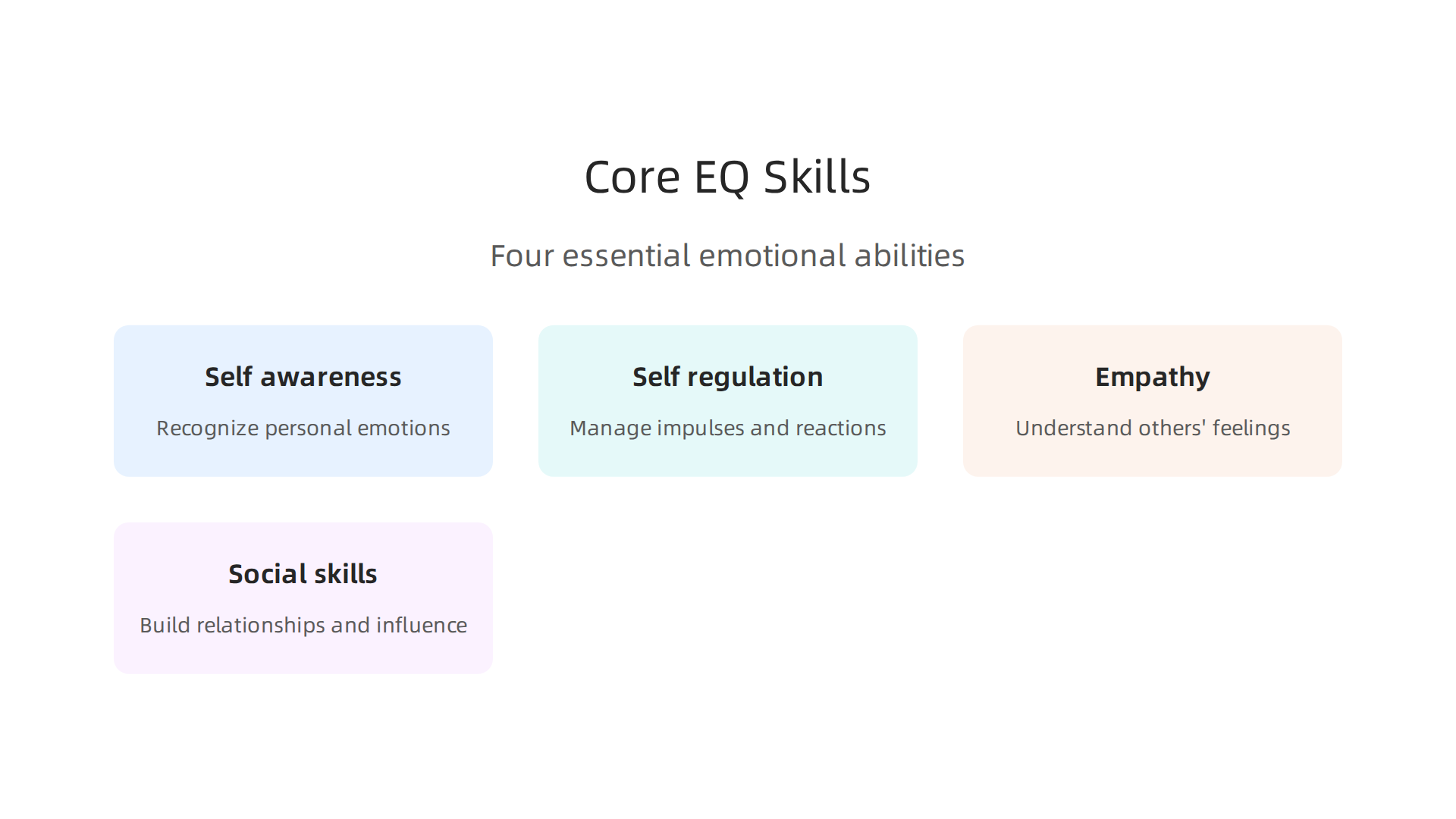
- Self-awareness: Understanding your own triggers
- Self-regulation: Keeping your cool under pressure
- Empathy: Truly feeling what the buyer feels
- Social skills: Building rapport and navigating difficult conversations
The best part? Many modern training programs now include EQ assessment tools to track your progress. You take a baseline test, practice, and retest to see real improvement. According to the Soft Skills Development Statistics report, the average ROI for soft skills training programs can reach as high as 256%. That is a massive return from learning to read people better.
And here is the thing: companies are betting big on this. The soft skills training market is valued at USD 43.15 billion in 2026 and growing fast. Businesses know that EQ leads to better sales outcomes. In fact, the Sales Training Statistics for USA 2026 show a 27% increase in commercial training budgets. Smart leaders are investing in communication skills training because it pays off.
If you want to take your EQ skills further, check out our guide on fueling sales growth with leadership mentoring for sales people to see how coaching can sharpen your emotional intelligence.
3. Clear Communication: Crafting Value Propositions That Stick
You have read the room. You know how the buyer feels. Now comes the hard part: saying the right thing in the right way.
A huge part of communication skills training is learning to cut through the noise. Buyers today are busy. They don’t have time for long speeches. They need clarity and brevity. According to the Space Talent guide on value propositions, a strong value proposition must be clear, relevant, and focus on real problems. It also recommends using simple, jargon-free language.
So what exactly is a value proposition? Think of it as a short promise. It tells your customer exactly what you will do for them and why they should pick you over the competition. The Shopify guide to value propositions explains the process well. It uses two main elements: a customer profile to help you get inside your audience’s head and a value map to show how you will help them. A good value proposition also differentiates you in crowded markets. That is exactly what modern soft skills training courses teach you to build.
The best courses in 2026 focus on mapping product features to real customer outcomes. They give you frameworks that make this easier. Three big ones are SPIN, Challenger, and MEDDIC. SPIN helps you uncover pain through Situation, Problem, Implication, and Need-payoff questions. Challenger teaches you to teach, tailor, and take control of the conversation. MEDDIC makes sure you properly qualify leads by looking at Metrics, Economic Buyer, Decision Criteria, Decision Process, Identify Pain, and Champion. All three frameworks depend on one thing: clear communication that reduces friction in the buying journey.
Here is the thing. A value proposition is not a one-and-done document. Markets shift. Competitors appear. Customer needs change. The siift.ai guide recommends scheduling quarterly reviews of your proposition against current customer feedback. That means your communication skills training should also teach you how to update your message over time.
If you want to see how clear communication fits into the bigger picture of sales leadership, check out our guide on achieving peak sales performance with the transformational leadership model. It shows how a structured message drives team results.
4. Empathy in Sales: Understanding Customer Pain Points
Crafting a clear value proposition is only half the battle. The other half is truly feeling what your customer feels. That is where empathy comes in.
Empathy is not about being nice. It is about understanding the emotions and problems your buyer is carrying.

When you get this right, you ask better discovery questions. You build deeper relationships. And you stop pitching and start solving.
Here is the reality. Most salespeople talk too much. They focus on their product instead of the person. The best soft skills training courses in 2026 teach you to flip that script. They focus on communication skills training that puts the buyer first. One of the most powerful tools you can learn is active listening.
Active listening is more than staying quiet. It means hearing what is said and what is not said. A great resource on active listening techniques recommends eliminating distractions, practicing the pause, and using open-ended questions. These small habits show the buyer that you care about their situation.
Another strong approach comes from the Center for Creative Leadership. Their research outlines six specific skills for leaders, including paying full attention, withholding judgment, and reflecting back what you hear. These are exactly the kind of soft skills examples that top sales training programs include.
Why does this matter so much? Because empathy drives repeat business. When a buyer feels understood, they trust you. They come back. They refer others. And they are less likely to shop around.
Good training programs use perspective-taking exercises to build this skill. They ask you to map the customer journey step by step. Where does the buyer feel confused? Where do they feel anxious? Where do they need reassurance? When you know those points, you know exactly where to focus your message.
If you want to see how empathy and trust come together in real sales leadership, check out our guide on building trust with the right leadership vocabulary. It shows how the words you choose can either open doors or close them.
Empathy is a skill you can practice. And when you pair it with a strong value proposition, you become a salesperson that buyers actually enjoy talking to.
5. Negotiation Skills: Finding Win-Win Outcomes
You have built empathy. You have connected with the buyer. Now comes the moment where deals either grow or shrink. Negotiation.
Many salespeople hate this part. They worry about sounding pushy. They give discounts too fast. But here is the truth. Great negotiation is not about winning at the other person’s expense. It is about finding outcomes that work for both sides.
The best soft skills training courses teach specific negotiation tactics like BATNA (Best Alternative To A Negotiated Agreement) and principled negotiation.
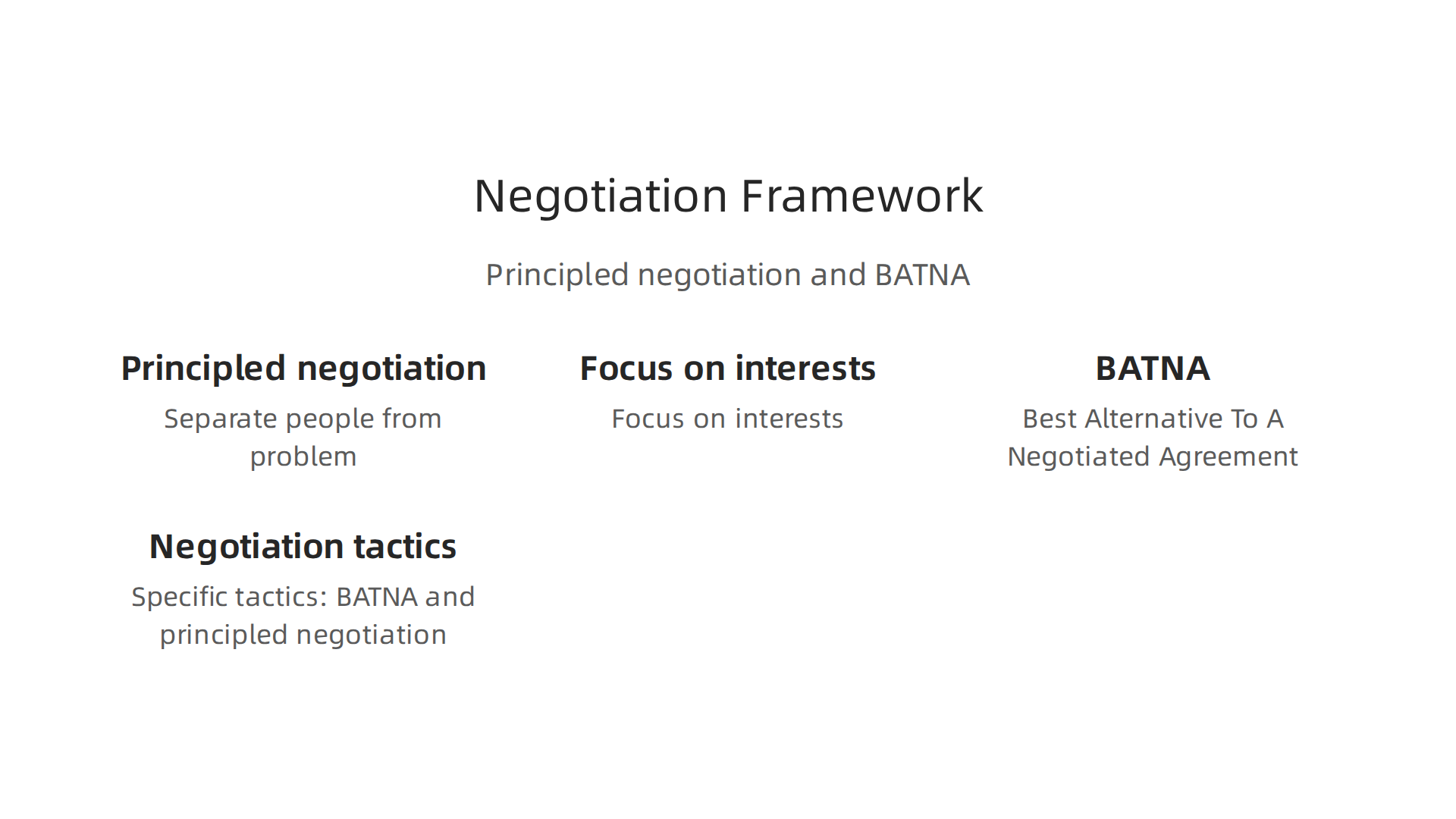
These methods shift the focus from haggling over price to solving real problems. When you know your BATNA, you know your walkaway point. That gives you confidence at the table.
According to a recent guide on proven sales negotiation techniques, anchoring early and using silence are powerful moves. Anchoring means stating your value first so the discussion starts around your number. Silence after that anchor lets the buyer think without pressure.
Here is what research shows. Sales teams that invest in negotiation training see better close rates and stronger margins within months. One source notes that training programs teach sellers how to handle pricing objections with confidence. That confidence translates into fewer discounts and bigger deals.
How do you actually learn this skill? Role-play simulations with real feedback are the gold standard. You cannot learn negotiation from reading alone. You have to practice. Good programs put you in realistic scenarios where you negotiate, make mistakes, and get coached on what to do better. This is one of the best soft skills examples of hands-on learning.
If you struggle with discounting, principled negotiation is your answer. It separates the people from the problem. You focus on interests instead of positions. For example, instead of fighting over a 10 percent discount, you ask why the buyer needs it. Maybe they want a longer payment term instead. That costs you less and satisfies them more.
A great way to go deeper on this topic is our guide on how to master price negotiation to achieve peak sales performance. It gives you a clear system for protecting your margins without damaging relationships.
When you combine strong negotiation skills with communication skills training, you stop leaving money on the table. You close stalled deals. And you build a reputation as someone who is fair but firm. That is the kind of salesperson buyers actually want to work with.
6. Adaptability: Handling Objections and Pivoting
You have sharpened your negotiation skills. Now comes the real test. A buyer throws a tough objection at you. Maybe they say your price is too high. Or they question your value. How you respond in that moment makes or breaks the deal.
Adaptability is the skill that separates average salespeople from top performers. It means staying calm when things go off script. It means reframing a problem into a solution. And it means pivoting your approach without losing your cool.
Great soft skills training courses teach you exactly how to do this. They focus on cognitive flexibility and stress management. You learn to step back, breathe, and ask the right questions instead of reacting defensively. One study shows that training programs teach sellers how to handle pricing objections with confidence. That confidence comes from practice.
Here is what adaptability looks like in real conversations. The buyer says, "We can’t afford this." Instead of dropping your price, you reframe: "I understand budget is tight. Let’s look at the cost of not solving this problem." You re-engage by shifting focus to value. That is a soft skills example in action.
The best programs use real objection scripts and rapid response drills. You practice until the right response becomes automatic. This is not just communication skills training. It is life skills training. You become better at handling surprises everywhere, not just in sales.
Remember, objections are not rejections. They are requests for more information. When you adapt quickly, you build trust. You show the buyer that you understand their world. And that is how you turn a "no" into a "yes."
7. Time Management: Prioritizing High-Impact Activities
You know the feeling. You spend hours calling leads that never pick up. You answer every email the second it comes in. At the end of the day, you look back and wonder what you actually accomplished. Without a system, sales professionals waste huge chunks of time on low-probability prospects. That hurts your numbers and your sanity.
This is where soft skills training courses help the most. They do not just teach you how to talk. They show you how to invest your time where it counts. You learn to separate busy work from real progress.
Top programs cover proven methods like the Eisenhower Matrix. This simple tool helps you sort tasks by urgent and important.
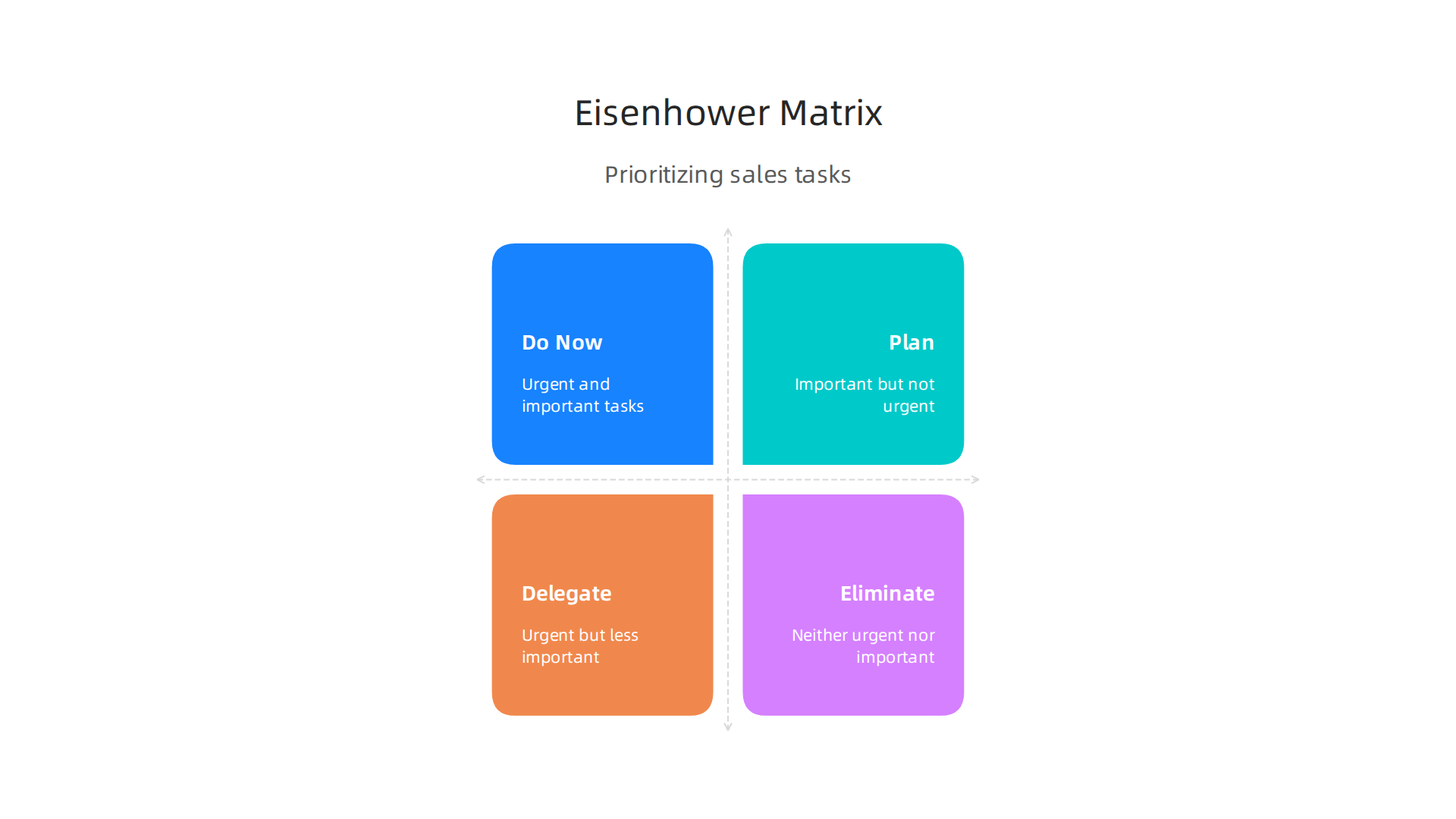
You stop doing things that are neither. Time blocking is another powerful technique. You set aside specific hours for prospecting, follow-ups, and meetings. No distractions. No multitasking. And lead scoring helps you rank prospects by how likely they are to buy. You focus on the people most ready to say yes.
These are real soft skills examples you can use today. In fact, many of the best sales training programs in 2026 list time management as a core skill. According to a roundup of soft skills training options, time management appears alongside communication and problem solving as a must-have topic. Check that list here. It shows that top trainers know how critical this skill is.
When you manage your time well, the results show up fast. You book more qualified meetings. Your pipeline stays full of real opportunities. You stop chasing dead ends. And you feel more in control of your day.
This is not about working harder. It is about working smarter. Good communication skills training includes time management because both go hand in hand. You need to know when to talk and when to walk away.
Start with one technique. Try time blocking tomorrow morning. Or score your top 10 leads and only contact the top 3. Small changes add up. For more ways to structure your sales process, read our guide on achieving peak sales performance. It lays out a clear system for focusing on high-impact activities.
Remember, your time is your most valuable asset. Spend it on the people and actions that move the needle. That is the real secret to consistent closing.
8. Growth Mindset: Continuous Learning and Resilience
Let’s talk about rejection for a second. You hear "no" ten times in a row. That deal you were sure about falls through at the last minute. A prospect ghosts you after three great calls. It stings. And if you let it get to you, it stops you cold.
But here’s the thing. Every top salesperson I know treats rejection differently. They do not take it personally. They see it as a data point. They ask themselves what they can learn from the loss. That is the heart of a growth mindset.

A growth mindset is the belief that you can get better with effort. You are not born a great closer. You become one. And soft skills training courses in 2026 lean hard into this idea. They teach you that failure is not final. It is feedback.
Good programs build resilience through specific practices. For example, you set clear goals for each week. You review what worked and what did not. You hold yourself accountable without beating yourself up. According to a roundup of the best sales training programs, many top courses now focus on building emotional intelligence and active listening as part of this resilience framework. You can check that list here. It shows how trainers connect soft skills like adaptability and perseverance directly to long-term success.
Goal-setting is a big piece of this. You do not just say "I want to sell more." You say "I will make 20 calls by 10 AM and ask for the close in every conversation." Then you track your results. Self-reflection is another piece. You take five minutes at the end of the day to write down one thing you did well and one thing you can improve. Small habits like this build momentum over time.
These are real soft skills examples that protect you from burnout. Sales is a high-pressure job. Without resilience, the stress piles up. You start dreading your calls. Your energy drops. Your numbers follow. But when you treat every setback as a chance to learn, you keep moving forward. You stay in the game longer. And you feel better doing it.
Many of the best sales courses in 2026 include modules on accountability structures. You might pair up with a peer coach. Or you join a training program that checks in on your progress weekly. For a look at how top sellers structure their learning, check out this guide on career growth from a sales assistant role. It shows how continuous skill building leads to real advancement.
Remember, your mindset shapes your results. When you believe you can improve, you actually do. That belief turns a string of rejections into a runway for growth. And it keeps you hungry for the next close.
Summary
This article explains why soft skills training is the sales superpower many reps are missing and shows which skills deliver the biggest business impact. It summarizes the 2026 market context and research-backed ROI, then breaks down core competencies—active listening, emotional intelligence, clear communication, empathy, negotiation, adaptability, time management, and a growth mindset—and how each improves close rates and retention. You’ll learn practical frameworks (SPIN, Challenger, MEDDIC), hands-on learning methods (role-play, feedback loops, assessments), and negotiation tools like BATNA that protect margin. The piece also describes how modern courses teach these skills, how to practice them in real calls, and why companies are investing heavily now. After reading, you’ll know which skills to prioritize, which training formats work best, and actionable steps to start building habits that move your numbers.
Category
Sales Training
Written by

Published
April 30, 2026
More from the blog
Related reading





Next steps
Put the ideas from this article into practice
Explore related posts on the blog or reach out if you need a specific resource.
Sales Closing Course is a specialized affiliate content website focused on helping people learn and improve sales closing skills. The site publishes high-quality content about sales closing techniques, high-ticket sales training, objection handling, communication skills, closing frameworks, income p